Yes, my title was spelled that way intentionally.
Hello, friends! Welcome back.
I spoke with a few of you about my hot takes on Bluey‘s The Sign from last week and got some pushback. I suspected I was going to be in a minority on this one. However, some feedback that I did find interesting was the rebuttal that Bluey’s family’s decision was not without big consequences—Bandit had already quit his job, among other things, meaning there still will be uncomfortable growth zones to come in future seasons. I did not get this out of The Sign, but I suppose we’ll see if this is the case when we get new episodes in a few years!
(As an aside, I love discussion. If you have something to say, please leave me a comment below, contact me, or @ me on X/Twitter.)
(As a second aside, after I typed this all out I learned that Bluey is having yet another surprise episode—or already had another surprise episode, by the time this gets posted. Hopefully that picks up a few hanging threads, but we’ll see!)
As a reminder, The Failed Technomancer, a roughly 150,000-word novel, has been posted in its entirety here. It’s a fun, dark science fantasy adventure set in a post-apocalyptic world featuring (to use the trope name, not speaking literally) space wizards. Perhaps most importantly, it’s free, but if you’d rather pay for another format (or just want to help support me) there’s links to the print version, ebook, and audiobook here. (For those that care, in most places I was able to do the ebook non-DRM, so side-load all you want into your preferred reading device.) The sequel is slow in coming, admittedly because I’ve a handful of projects I’m working on and I’m curious what will stick, but it will not go unfinished.
I’ve received some very positive feedback for The Courage in a Small Heart recently. If you like short stories, and if you like small mice going on big adventures, I think you’ll fall in love with Hazel and the World of Murid. (A full-length epic science fantasy novel set in the World of Murid happens to be my current primary project, so there will be more, have no fear.)
Bloggyness Review—Across the Spider-Verse
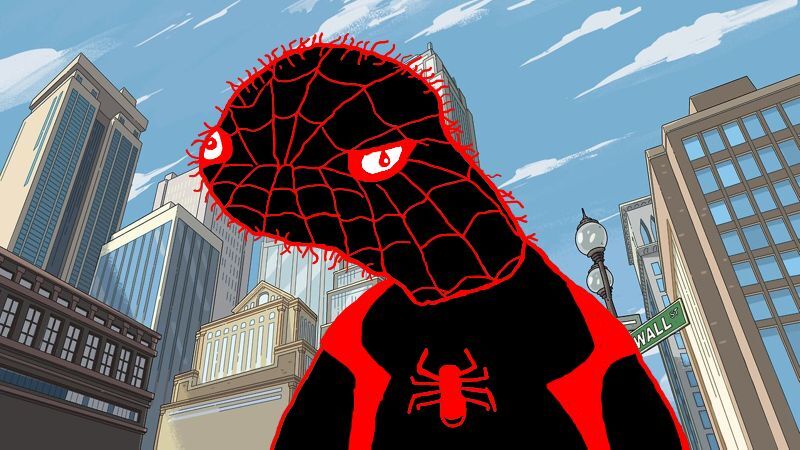
I’ve got another hot take for you guys: I thought the critically acclaimed, multi-award-winning epic animated feature Spider-Man: Across the Spider-Verse was high-mid. I give it a 6/10, maybe a 7/10. Unfortunately, for me, it did not reach the extremely high bar set by Into the Spider-Verse. (The whole trilogy—if it ever gets completed, considering Sony cancelled the release date for the third movie and has yet to announce a new one—gets a 0/10 for movie titles, though. Way too same-y.)
Don’t get me wrong, it’s painfully obvious that Across the Spider-Verse was made by extremely talented, ambitious, Spider-Man-legacy-loving people. In fact, the movie absolutely drips with excess directly related to that talent, ambition, and love. At moments it’s breathtaking, and at others it’s way too much—and yet, not enough. I’ll get into that. Lots of spoilers incoming.
Let’s start with the good, because this movie is still worth watching. 6/10 or 7/10 is still a good movie, by my rankings. (I’m not IGN—I’ll give some books or movies scores below a 6, so the whole scale still has meaning.) While the animation hurt my eyes at times, at no moment could I say it wasn’t gorgeous. Across the Spider-Verse has its seams exploding with different art styles, intricate details, and a seemingly infinite number of ideas for how to reinterpret Spider-Man, at least visually; for the most part, this worked incredibly well, and was an amazing showcase for just how far animation can be pushed when it isn’t locked in a house style à la Pixar or Disney. I’m fairly confident that almost any frame of this movie could be reasonably framed and put up on a wall, especially scenes from Gwen Stacy’s universe—just amazing.
Another excellent part of this movie (that’s admittedly the good part of a mixed bag) are the characters. Oh boy, there’s a lot of them. I’d argue there’s way too many of them. But that doesn’t stop many from having extremely fun, memorable elements. Miles doesn’t get as much focus as I would have preferred, but his emotional struggles are real and his growth painful, making him easy to get excited about and root for. Gwen Stacy has many amazing scenes of pathos. Peter B Parker is hilarious, and Spider-Daughter (or whatever her actual name) is effective as cute comic relief. Pavitr Prabhakar isn’t present as much as you might think, considering the advertising, but he’s extremely memorable. And I fell in love with Miguel O’Hara; if I had any interest in comics or graphic novels at all, his costume alone would have sent me tearing out of my house to purchase a Spider-Man 2099 story. He’s an excellent villain, for the most part.
That said, despite how much fun many of these new characters were… there were way too many of them. And the fact that so many of them get about a few minutes of introductions adds up fast in a movie already overloaded with exposition. They are all spider-people, and their stories all follow the same blueprints, making their introductions, while colorful and flashy… really same-y, and probably unnecessary. A fair amount of time and expositional weight could have been removed from Across the Spider-Verse if the writers had stuck with the already-established alternate spiders of the first movie, being (more of) Peter B Parker, Spider-Ham, SP//dr (Penny Parker), and Spider-Noir. (I left Gwen Stacy off that list because, unlike Peter B Parker, she’s both present and gets a lot of focus.) The movie is just so weighed down with introductions and world-building that it leaves hardly any room for meaningful character work and development, almost all of which happens right at the beginning of the movie. I don’t have any reason to believe the third movie will be much better in this regard, considering how many characters are introduced or re-introduced in the literal closing minutes of this movie.
Here’s the thing that killed Across the Spider-Verse for me, though, completely took me out of the movie and destroyed my suspension of disbelief: Miguel O’Hara explaining the nature of the spider-verse in detail to Miles Morales. I hated this scene. And not because everything shared in that scene didn’t really need to be shared with an audience who has seen a Spider-Man movie or TV series before—although it is true that almost everyone knows the archetype, making explaining it unnecessary. (We just needed to know that if the pattern breaks a dimension in the multiverse might get destroyed.) No, I hated this scene because it completely wrecks the movie’s own rules.
Across the Spider-Verse makes it clear pretty early on that Miles Morales has been blacklisted from spider-society. He’s essentially been put under dimension arrest, with all the other spiders told they aren’t allowed to see him or talk to him for the good of the multiverse. Miguel O’Hara (Spider-Man 2099, and this movie’s real antagonist) ordered this because Miles already represents a break in the “canon,” the archetypical pattern of a Spider-Man story, but since he is following the canon closely enough it appears that the multiverse isn’t at risk of falling apart. All right, fair enough. That means that as long as Miles is kept in his universe as much as possible and, most importantly, kept in the dark at least until he experiences all of the critical “canon” moments that keep the multiverse stable, it’s just a matter of time and patience for Miguel to get exactly what he wants.
As a result, Miguel bringing Miles to the spider-society headquarters and telling him everything is completely antithetical all that Miguel is and stands for. Miguel is presented as hyper-competent, hyper-intelligent, cruel, and coldly pragmatic; if these things are true, he would not have told Miles anything, nor allowed anyone else to. At most he might have decided to protect the timeline by kidnapping Miles, imprisoning him until the “canon” events were completed, and then sending him home without any explanation whatsoever, which would still accomplish his goals and not create the issue of Miles knowing too much (and therefore having the knowledge to change the timeline further). By teaching Miles everything he knows to become an existential threat to the multiverse, Miguel is more closely presented as a dense, short-sighted moron; while there’s nothing inherently wrong with dumb villains, I just couldn’t buy it in the context of Across the Spider-Verse.
I felt I was given two scenarios, both impossible for me to accept, and the movie fell apart as a result. Other things that previously I was happy to accept without explanation (because of the nature of the movie I was watching) suddenly made me itch and demand explanations—like the fact in the first place that the multiverse has as its absolute focal component the creation of both a Spider-Man/Woman in every dimension and a specific story pattern for that Spider-Man that must be followed to prevent nihilistic catastrophe. That makes absolutely no sense! What a bizarre nature of existence. But, again, that’s something you should just accept as a fun part of the movie—and it is fun—but it is one of many things that become utterly bizarre once your suspension of disbelief goes away.
(OK, one more thing that’s only weird once you’re taken out of the movie. Related to the above, I just laughed at Universe 42 immediately falling into criminal government as a result of Spider-Man being taken from that universe. Really, there are no other good guys in existence? Even just a group of regular human freedom fighters who, through scrappy intelligence and grit, manage to stop the bad guys? Again, this is something I would just accept normally, but Miguel destroyed my suspension of disbelief, turning this situation from a serious issue to surreal comedy.)
Now, what I brought up above—Miles Morales learning nothing of critical value, and either being sent home to watch “canon” events unfold, powerless to stop or change them, or being in the otherwise same position but imprisoned in Miguel’s dimension—might not make for a satisfying movie, but I don’t think that’s how things should have actually gone. I think the movie could largely remain as it is, with all the real strengths that it does have, if someone other than Miguel had explained everything to Miles. I think the movie would have worked better if Miguel had imprisoned Miles, threatened all other spiders to not say a word to Miles (at least until it was too late for Miles to change the canon), and then left Miles to rot… but Gwen Stacy, or Peter B Parker, or Hobie, or someone breaks ranks, tells Miles the truth, and frees him… then cue Miguel showing up, doing his little speech about how the canon must remain intact, and then cue the really long chase scene featuring lots of awesome background Spider-Man reinterpretations.
In my head, anyway, that makes more sense, would have worked better, although it would require having the end-of-movie change-of-heart for at least one spider-person to initiate a little earlier.
I think the reason Across the Sider-Verse unfolded the way it actually did is because the movie was already overloaded. It already had too many characters, it already didn’t have time for scenes that needed a little slowing down or breathing room, it already was stuffed to the gills with exposition. We didn’t get time with the new Spideys to get to know them and see what makes them truly unique, even while fitting within the Spider-Man archetype, because there wasn’t time, so instead we get exposition-dumping intros for each. Explaining the nature of the multiverse mostly through demonstrate-don’t-describe would have further ballooned the movie’s runtime without big cuts in other areas, so instead we have Miguel exposition dump on Miles. These are functional fixes and, in total honestly, I still look forward to Beyond the Spider-Verse—but I do think they held this movie back from true greatness.
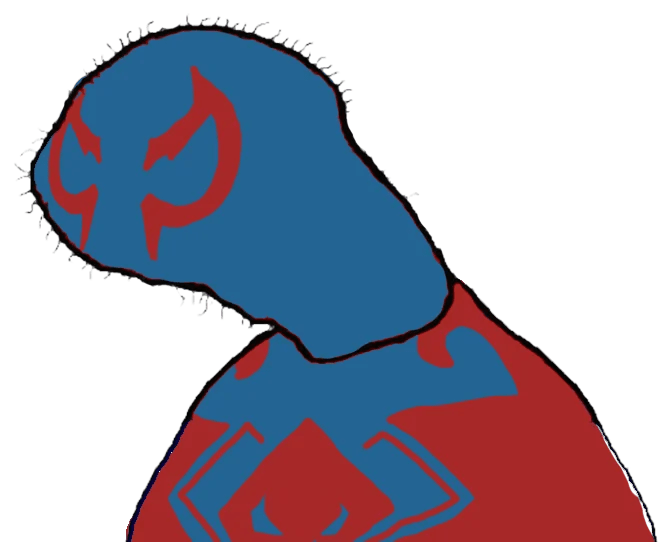
Miles, I apologize for calling you Spooder-man at the beginning of this review. In reality, Mooguel Oo’Hara was the true Spooder-Man hiding among us this entire time.
Writing Updates
Ha ha! The writing train is chugging along. Last week I was at about 72,000 words—this week, 78,000 words! That’s right, Hazel Halfwhisker is moving along nicely.
You know what? I’m going to include this story’s prologue below. Keep in mind that this is the first draft and everything is subject to change—including the existence of this prologue—but I’m so happy that I want to share more than I usually do.
Send-Off
Was my review of Across the Spider-Verse a hot take? What were your thoughts on the movie? Are you excited for Beyond the Spider-Verse? And what would you rename each movie to, if given the chance? Let me know! Leave some comments!
If you want to see my blog posts each week, subscribe! It’s on the left there, you can plug your email in and then be alerted every Monday with a quick email that brings you here.
Have a great week! Actually, wait, don’t leave yet—here’s that sneak peak into Hazel Halfwhisker, via the prologue. (I can’t emphasize enough that this is a first draft—I wouldn’t be sharing it if I didn’t think it was fun or readable, but you will find errors and/or things will change before the final is ready for publication.)
Hazel Halwhisker—Prologue
“I thought I heard it around here,” Meadowlark whispered.
Pebble suppressed a sigh. She liked Meadowlark, liked the youth enough to humor her when she expressed worry about hearing suspicious sounds in the forest. Despite that meaning leaving family and a warm nest to go tramping about in the moonslight. The night before a festival, no less. Pebble had even taken her seriously enough to prepare more than she usually would for a hike to the far outskirts of Whiskerroot: in addition to her longspear on her back, she had her two ice-stone fangs, one on each hip, taken from the corpse of a rat long ago.
But, truth be told, she didn’t really believe Meadowlark. If she did, she’d have a spear in her paws, or the leather-wrapped hafts of her ice-stone fangs. Walking into danger with a weapon already drawn could be the difference between life and death, after all. Maybe a younger Pebble would have kept herself armed anyway. But the Pebble following Meadowlark now, brushing past tall grasses and grumbling about her aches and pains, was four winters old and not trying to impress her only companion.
Meadowlark hopped to the top of a tree root, tall enough that her short tail didn’t touch the soil even when she sat on her haunches. She looked around, confused, then said, “I think we go this way.” She started following a narrow trail that edged the base of an enormous tree with a wide trunk, weaving in and out of roots and, occasionally, through a tunnel dug under.
Pebble shook her head. Four winters old! That was too young to be slowed down by old injuries. Most mice, with the favor of Ral-Vormtsuud, saw six winters, maybe lived just past a seventh, and didn’t slow down much until near the very end, when their strength suddenly fled.
Walking up an incline, Pebble winced as her leg sent a quick jolt of pain up her hip. That happened sometimes—being stabbed had that effect, even moons and moons later. Pushing aside a small branch reawoke an ache in her shoulder, reminding her of a spider bite she’d taken last spring. Pebble had thought that gorspider was going to kill her. She was a lucky, lucky mouse to have survived all she had. Perhaps the consequence of such luck would be that she’d have to put down her spear earlier than most and watch others pick it up and wield it in the defense of Whiskerroot. Old before her time, and hobbled by pains.
What a miserable thought. Pebble would rather have her spear pried from her cold, dead paws.
A beam of moonslight pierced through the treecover, illuminating a stretch of brown soil with lonely blades of grass and other small plants here and there. A cluster of shrubs stood at the end of the blue-tinged light; the blue-tinted color of the moonslight told Pebble that the second moon was brighter than the first, now. Night was passing quickly.
“How close are we?” Pebble growled. Promising as Pebble found Meadowlark, she was prone to bouts of daydreaming. Perhaps she had just imagined whatever she had heard. “It’s been a while since you last said we were near.”
“I think… Oh, I was so scared when I ran away! It’s hard to remember.” Meadowlark stopped walking and stroked one of her ears to comfort herself. As she thaymaed, she said, “I swear it, auntie! I’m not lying! I heard something—a voice, raspy and mean. It startled me so badly I would have lost my tail and whiskers if that were possible!”
Pebble bent over to put her face at the same level as Meadowlark’s. Pebble was a very large mouse, about seven inches long, and she towered over Meadowlark, even though the young gorskrmus was the same size as many adults of other varieties of mouse—four and a half inches. Meadowlark sniffed and looked into Pebble’s eyes, and appeared to calm just a little. Pebble said, “It was brave of you, if you were so scared, to lead me out here. Perhaps you imagined the sound, or perhaps the creature moved on. But it was still brave of you to face that fear.”
Meadowlark sniffed again, then smiled. “Thank you, auntie.”
Pebble rose back into the air. “Now, enough with those nose-noises. Perhaps on our way home we can spot some mushrooms, or berries, and bring back a prize. Then your siblings will applaud our journey instead of making fun of us for it.”
“I’d like that,” Meadowlark said. She hopped to her back feet and started walking toward home, a small smile on her lips.
Pebble pulled her longspear off her back and set its butt to the ground, using the thing as a staff as she began following Meadowlark. That was a good mouse. Meadowlark was too gentle to ever be a Sharptooth, but whatever she did with her life, she would do it well. And her eventual pups would be the better off for it.
“Why were you so far out into the forest, anyway?” Pebble asked as they started navigating tree roots again.
“Oh, nothing. No reason,” Meadowlark said quickly.
“Come on, tell your auntie. It’s more suspicious not to talk.”
Meadowlark turned her head slightly as she walked, and in the gentle light of the moons and stars Pebble could see her chewing on her bottom lip. “Momma won’t like it.”
“I’m not momma, I’m auntie. And if your story is good enough, maybe I’ll share some stories about your momma that will make your whiskers curl.”
Meadowlark brightened, thought she spoke slowly, still clearly a little nervous to let Pebble know what she had been doing. “I was going to meet someone out here… a big, strong buck named Hasper…” She looked over her shoulder at Pebble.
Pebble raised a brow. “That’s it? You didn’t do anything foolish, did you?”
“What?” Medowlark looked confused, then her brows raised as she realized what Pebble was suggesting. “No! Gross. Besides, we’re not married yet. We were going to go hunting for berries.”
“Yeah, I’m sure that’s all he had in mind,” Pebble grumbled, more to herself than anything else. She immediately regretted her quip and hoped that Meadowlark hadn’t heard it. Pebble didn’t want to share her general pessimism with any pups that still had time to get married and start a family. Doing otherwise only led to bitterness.
Something caught Pebble’s attention. She couldn’t quite describe what it was, but after spending most of her four winters of life in the forest, where danger rarely was far and often was unknown, she’d learned to trust when her mind told her that there was danger nearby. She continued to listen to Meadowlark with half an ear as she chattered about her buck, but focused mostly on the forest around her, and the many leafy areas of underbrush where something could be hiding.
Or was it above her? Pebble glanced upward, painfully aware of how visible she and Meadowlark would be to a passing owl. They should be trying harder to always keep some sort of barrier between them and the upper levels of the trees.
A raspy voice that was distinctly not Meadowlark crawled into Pebble’s ear. “He is hungry. He hungers. His stomach always rumbles. He is the Hungry. I am his nose.”
Whatever Meadowlark was babbling on about ended with a shrill squeak of terror. She ran behind Pebble and clutched the fur of her back, crying, “That’s the voice! That’s the voice I heard!”
The Hungry was another name for Matagroskr, the first among rats and commanded to be by the voice of Fryth. He was also the eternal enemy of mice. Pebble narrowed her eyes and pointed her longspear toward where the sound had come from. All she saw was a cluster of grass leaning against a gnarled tree root, but that didn’t mean anything. In this forest, anything from shallow dens to extensive tunnels could be found in the most unexpected of places.
“Let go of me. Stay back here,” Pebble growled. Meadowlark slowly released her grip, and Pebble began creeping forward.
The voice repeated itself, raspy and low. It was accompanied with a wet gurgle that Pebble had missed before. “He is hungry. He hungers. His stomach always rumbles. He is the Hungry. I am his nose.” This was followed by coughing, then silence.
All of her aches and pains were forgotten. Pebble felt sharp, focused, like a claw that could cut with the lightest of touches. She never felt more alive, more young, than when she was ready for a fight. Quietly, ever so quietly, step by step, she approached the grass, holding her longspear in one paw and reaching for an ice-stone fang with another. She slashed the grass, the nearly see-through blade of the black stone fang easily cutting down a swath, then leaped backward, longspear held forward.
Nothing leaped out at her. But she had heard something.
Behind the grass was a little den, dug out beneath a thick root and at least deep enough to block whatever was in in from view. Pebble kept her eyes focused on the den, but she swiveled her ears in all directions to keep herself from getting ambushed, just in case. She stepped forward once again, standing as tall as she could to see into the den while staying as far from it as possible.
Lying on its side in the dirt, eyes closed and jaw moving soundlessly, was a rat.
Pebble narrowed her eyes. A rat. Its fur was black, its tail long and pink, and it had bloody gashes in its side and neck that leaked dark blood, staining the soil it lay on. That explained the gurgling Pebble had heard—blood must be trickling into its throat.
Pebble edged closer, feeling pity for the creature. Regardless of what she felt about rats in general, she didn’t enjoy seeing a living thing that was clearly suffering. Perhaps a fox had found it, or a weasel; however the rat had escaped, all it had done was deny the predator a meal. The rat would not survive its wounds; Pebble could see inside its body, a little, see damaged organs. She doubted that even a very powerful bloodskræcher would have been able to save it.
“He is hungry. He hungers. His stomach always rumbles. He is the Hungry. I am his nose,” the rat rasped, almost making Pebble jump. Eyes still closed, it twitched its legs as if to push itself up, then lay still again, save for shallow breathing and the continued movement of its jaw. This creature was a fighter; its death would be long, slow, and painful.
Pebble lifted her longspear and aimed carefully. Better to put the creature out of its misery quickly. “Close your eyes and cover your ears, Meadowlark,” she growled.
“What are you—” Meadowlark began.
The rat’s eyes snapped open. They should have been black, or maybe red, the same as all rats; instead, the creature’s eyes were yellow, the same yellow as urine, and bulged in the creature’s skull. Pebble flinched, almost taking a step back. Before Meadowlark could finish, the rat screeched, “Wesmellhim, wesmellhim, heishere, heishere, andtheTailwillfindhim. TheTailwillfindhim, Ha-Thitsle! My… my nose… for Matagroskr…” Then the rat stopped breathing; the trickle of blood dripping from its neck stopped; and the rat’s eyes slowly faded to black. All was silent, save for the distant mating calls of crickets and other insects.
Pebble stabbed, perfectly piercing the rat’s heart with her longspear to ensure it was dead. She pulled the spear out and wiped its cat-tooth head on the rat’s fur, then turned and looked at Meadowlark. The poor mouse was horrified, paws to her mouth and eyes unblinking. She was probably frozen, too scared to thayma.
Pebble held back sigh. She didn’t understand what had just happened—the rat’s words, though repetitious, had been nearly indecipherable. She tried to piece them apart in her mind as she put her spear away, approached Meadowlark, and gently led her underneath a nearby bush, well out of sight of the dead rat and protecting them from view. She helped Meadowlark to thayma, continuing until the youth was capable of comforting herself. Then Pebble stood beside her, glaring through the bush’s leaves at the outside world, and wondered.
When it looked like Meadowlark was calm enough to talk, Pebble said, “Do you remember what you heard?”
Meadowlark started shaking again. “I don’t know. Something about smelling. Finding. Matagroskr. The rat’s… nose? Oh…” She moaned.
Pebble held Meadowlark close and shushed softly. “You’re fine. You’re fine. As soon as you’re ready, you’re going home. Where it’s safe. Heart and heroism, Meadowlark. Be brave.”
Later, just outside the clearing surrounding the hill of Whiskerroot, Meadowlark bouncing on her toes in readiness to be home, Pebble was still thinking of what she had just experienced. Then, within sight of Meadowlark’s family nest, Meadowlark bounded ahead of Pebble, running as fast as she could, her tail whipping through the air behind her. Pebble froze. She turned and looked back at the forest, moonslight creating every shade of darkness in the shadows that hung under branches and leaves.
“The ‘tail’ will find him? Is that what it said?” Pebble whispered. She shook her head, now more confused. What did that even mean?

 Boo Ludlow
Leave a comment