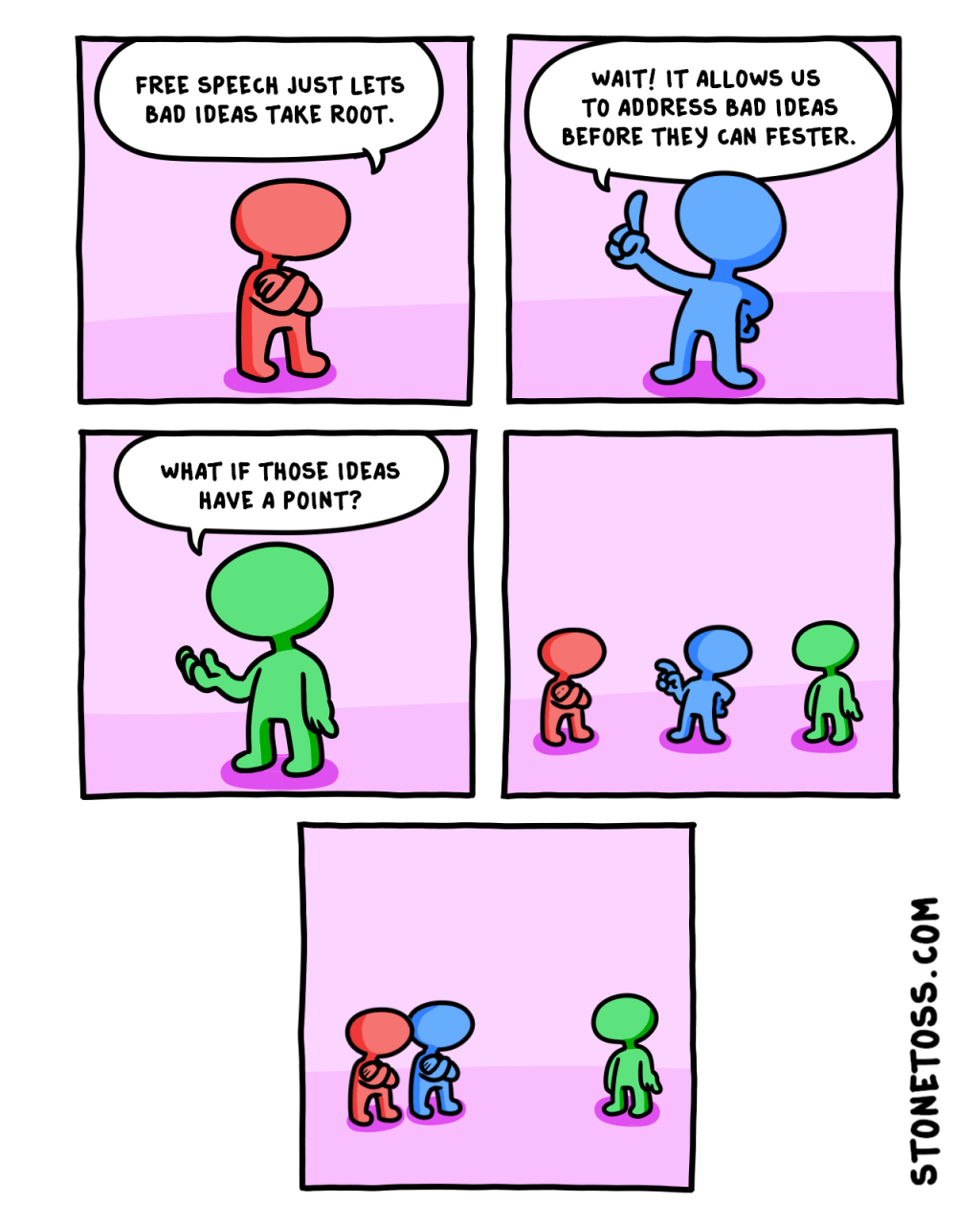
Oh yes, we’re back in on this topic again.
In November of last year I wrote an article titled Absolute Reality, Absolute Truth. Among other things, this article was a dialogue with my friend Tanner and his article, The Semantics of “Reality” w/ Carl Rogers; Tanner never wrote anything primarily intended to continue that conversation, but in a tangential article he made a comment that left me thinking for quite some time:
Then another friend of mine wrote a response article, where he also disagrees with Rogers though in a far more humorous and offense-based manner. Maybe “offensive” works there, I don’t think Boo would mind.
I kind of did mind, it turned out. But it took time for me to realize that.
I want to be completely fair to Tanner: he wasn’t being offensive—or even just rude—and I think his comment was accurate. Ever sensitive about his dialogue with (and comments about) other people, Tanner even reached out to me directly and asked if I thought what he said was unfair or went too far, and I told him to go ahead with it.1
Anyway, having my commentary on Rogers’ essay be called “offensive” did bother me, perhaps hypocritically. After all, I’m no stranger to saying that we shouldn’t be afraid of risking offense now and then.2 Still, I felt attacked—just a little. A warband hadn’t raided by village, but I had felt a flaming arrow or two strike my walls.
Offense has a negative connotation for a good reason, but I still believe it to be a good thing. Like any tool, it can be used constructively, and that’s what I want to meditate on right now.
By Any Other Name Would Smell as Sweet?
First, to make sure we’re on the same page, here’s what I’m saying when I use this family of words: “offense,” “offensive,” “to offend.” Offense is, essentially, a type of attack, a thing or action which pushes outward uncomfortably or unpleasantly; to offend is to perform some sort of attack which may hurt or upset, or otherwise cause discomfort; something is offensive if it causes discomfort or pain, or if it is an assault on the senses or something held to be valuable.
A common synonym for offensive is rude; I think the core difference between the two words is that offensiveness tends to be more targeted and intentional than rudeness. As well, I think something is more likely to be defined as offensive than rude if it targets something deeply valued by the offended party. Being flippant toward something precious or sacred, or overstepping bounds through neglect or negligence, is rude; specifically choosing to do these things is offensive.
How Can Offense Be Valuable?
As I mentioned earlier, offensiveness is a tool; it can be, and often is, misused, but that doesn’t mean it can’t be put to productive use. Hammers and saws, over a long period of time and with much effort, can build a house; they can also destroy a house, and far faster. But offense is an action or concept, and not something held in your hand, so when is it constructive?
When it’s used to seek after, or try to draw out, truth. To adjust the above metaphor, it’s like the ideal engineering process: you build something so that you can record all the ways that it fails, try to find solutions to those problems, and then build something better next time. In human interaction, effective, targeted offense is like the troubleshooting in an engineering project, intended to identify problems (hopefully accurately) so they can be fixed.
I first came to this conclusion when pondering Jesus Christ and His nature, actually. In Him is all goodness, plainness, mercy, truth, and justice; He is perfect, meaning not only has He never sinned and will never sin but also that He is fully developed, complete and whole, in every way.
And He insulted a lot of people.3
Note that I specifically do not use the phrase “make fun of.” I don’t believe that there was anything light about what Jesus said, even when He called Herod a “fox.”4 Every time He called someone (often the leadership of His own people) a hypocrite, thief, liar, murderer, fool, ignorant, and so forth, He’s exposing things as they really are. The people He is addressing are exactly what he says, most often literally and/or spiritually, sometimes metaphorically. Everything is very intentional, very thought-out, very targeted—and people were deeply, deeply offended, with multiple recorded instances of crowds attempting to murder Jesus after He addressed them.
I don’t expect everyone reading this to be Christian, or even to believe in any sort of God, but I hope that doesn’t matter, because there’s a point that can be drawn out of this that anyone should be able to recognize as self-evident: Truth is offensive.
For the word of God5 is quick, and powerful, and sharper than any twoedged sword, piercing even to the dividing asunder of soul and spirit, and of the joints and marrow, and is a discerner of the thoughts and intents of the heart.
Hebrews 4:12, KJV
Receiving unwanted Truth often feels like a direct attack, because our pet lies can’t survive it. Depending on the Truth, some people will kill to protect their carefully preserved illusions.
Back to Mud and Mortals
But I need to bring this down a level. Yeah, that’s the ideal—pure Truth tearing up delusion and setting things in their proper order. The problem is, I’m not Jesus, and neither is any other jester or commentator on the internet. No matter how sincerely I strive to say (and, more importantly, do) what’s right, to accurately call out things that are wrong, I’m going to screw up, and so are my fellow mortals. When I call someone out, there are going to be times where I’m not cutting through the crap, I’m just a jerk. I criticized my friend Tanner in a footnote, and I might be completely off base—so why risk it?
Well, the only way to get better at anything is to screw up, hopefully learn a lesson, and try again.
I hope this is self-evident, because it applies to literally everything in life that I can think of. You want to develop a talent or a skill? Get to work. Do it. You’ll mess up. You’ll have limits. In trying to expand those limits, there will be some sort of price to pay, and you might hurt yourself, you might hurt others. Why should truth-seeking be any different?
But then there’s the other side of the coin: if no one took risks, no one would ever learn or discover anything new. Nothing would be invented. Nothing would change for the better. Since we live in a world of entropy, we’d all be left slowly wasting away until we died.
Risking offense is a tool of truth-seeking; it’s a key component of freedom of thought. I don’t think I can state it better than Jordan Peterson did in his debate with Kathy Newman. For context, the duo were debating a variety of highly contentious topics, with Newman generally of the stance that it’s wrong to say things that might offend people.6 At one point she asked Peterson why he should have a right to offend people, he responded with this:
In order to be able to think you have to risk being offensive.
~Jordan Peterson7
In short, offense, truth-seeking, thought, and speech, are are inextricably linked, You can’t take one away without irreparably damaging, or also entirely removing, the others.
And, yes, this means that freedom of speech exists specifically to protect speech we don’t like—speech we find offensive. It’s healthy, the fact that some people are able to say a lot of things that just plain aren’t good or true (welcome to the internet), because that’s part of the try/fail/try again cycle, just played out on a far greater scale. In some ways this can be compared to the human immune system: exposure to a virus actually strengthens the system, while a system that’s never been tested or challenged folds much more easily to much weaker pathogens.
Eventually the best ideas, or at least the most functional ideas, are going to rise to the top—even ideas that, at one point in time, turned people into pariahs.
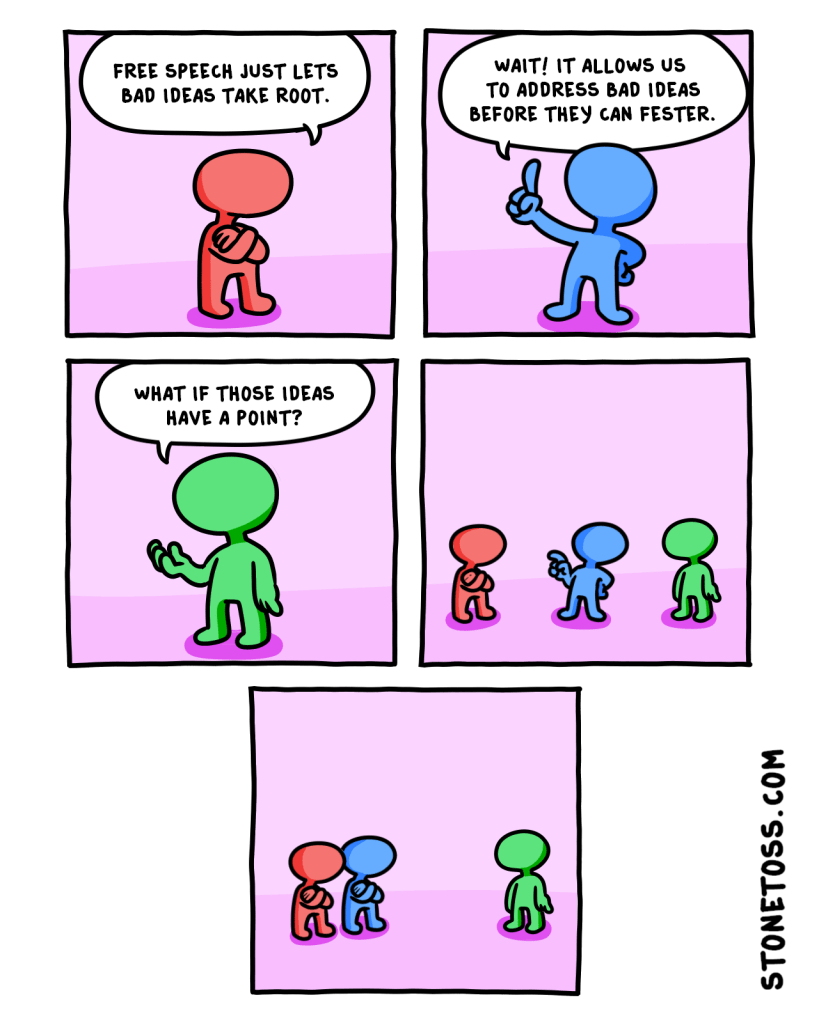
And that’s all to say nothing of the fact that getting rid of free speech—and the ability to offend—requires an answer to the question, “Well, who gets to decide what speech is allowed? Who gets to decide what is offensive? How will this be enforced?” It’s impossible to come up with any one centralized body that’s less scary to hand that control to than the unwashed masses.
Adding A Relative Spin to It
There’s another wrinkle to all of this that I want to touch on: Truth is never relative, but offense is extremely relative. What counts as giving offense, and what will be received as offensive, is extremely audience-dependent. (So, Kathy Newman, trying to account for everyone and anyone who might be offended is a fool’s errand.)
What counts as offensive varies by any category you can think of. The two sexes, generally speaking, fall into different distributions as to what is offensive; different ages; different social classes; different belief systems; different national origins; different temperaments; etc, all will disagree on what’s kosher. And that’s fine—or, at the bare minimum, it’s better than trying to force everyone to be exactly the same.
I’m going to stand on a soap box here: the only good people are the ones who can play ball with free speech, who can handle being offended now and then. Responding, in kind, with speech—kind or offensive—is all good and part of the package of ideal society. The ones who threaten to blow you up for it? Those people deserve to be expelled from society and conversation with prejudice.8
All right, let me put that soapbox away.
Don’t Be Nice; Be Kind
So what’s the opposite of a willingness to be offensive? Well, it’s something I define as nice. Note that being nice and being kind are often mistaken for each other, but they are not the same thing; there are many instances where someone uses the word “nice” and I think “kind” would be more accurate, or visa versa. Let me explain.
Niceness is an advanced form of unhealthy politeness. Someone who thinks we should all just be nice really thinks that any form of conflict whatsoever is the ultimate evil. A nice person doesn’t have standards or values that can’t be compromised or adjusted when faced with opposition. A nice person doesn’t really believe that evil or nastiness exists in the world, just that some people are in bad situations because of society or capitalism or some other term they don’t understand, and that such people need to be given all accommodations possible. A nice person is unable to recognize, acknowledge, or engage with the rougher realities of life, and instead creates fantasies to bridge the gap between the utopian way they believe things should be and how things actually are.9
Other terms that I’ve seen used are toxic niceness or toxic refinement.
Kindness has a spine. Kind people have values that they will stand for, that they will not compromise, and they are capable of getting tough when they need to; despite this hidden strength, they choose to be soft, gentle, inviting, and forgiving. Kindness is good, and while I’m generally focused on offense in this article, I don’t want to unintentionally come across as saying that everyone should be offensive all the time. We need more kindness in this world.
For whatever reason the following memes came to mind while I was differentiating niceness and kindness, so I’ll share them:
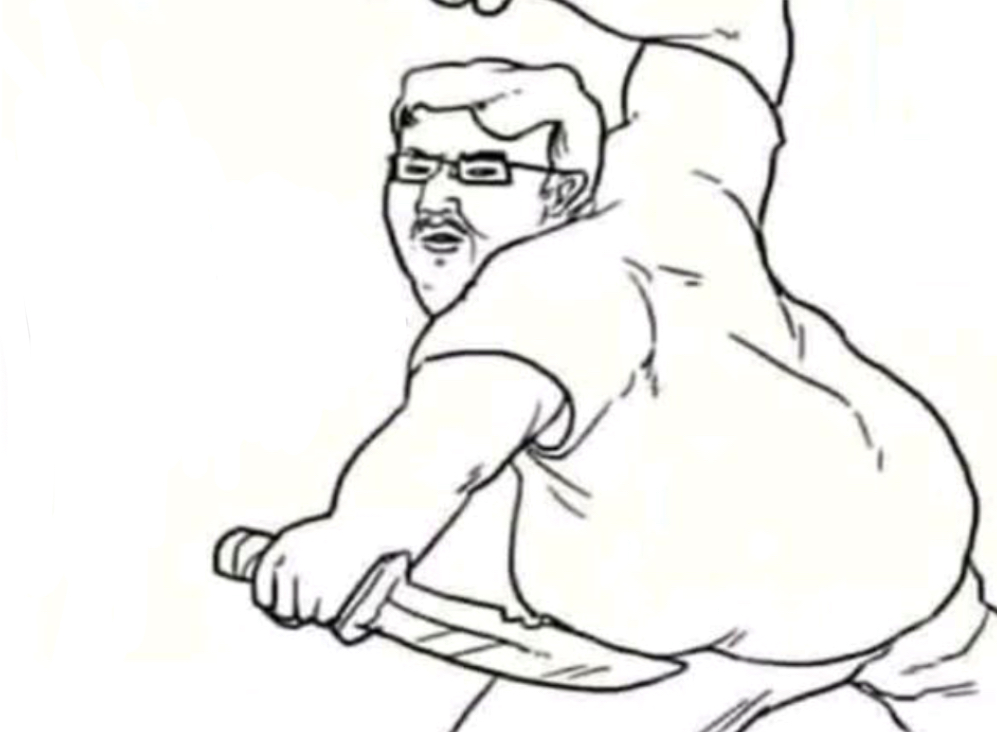
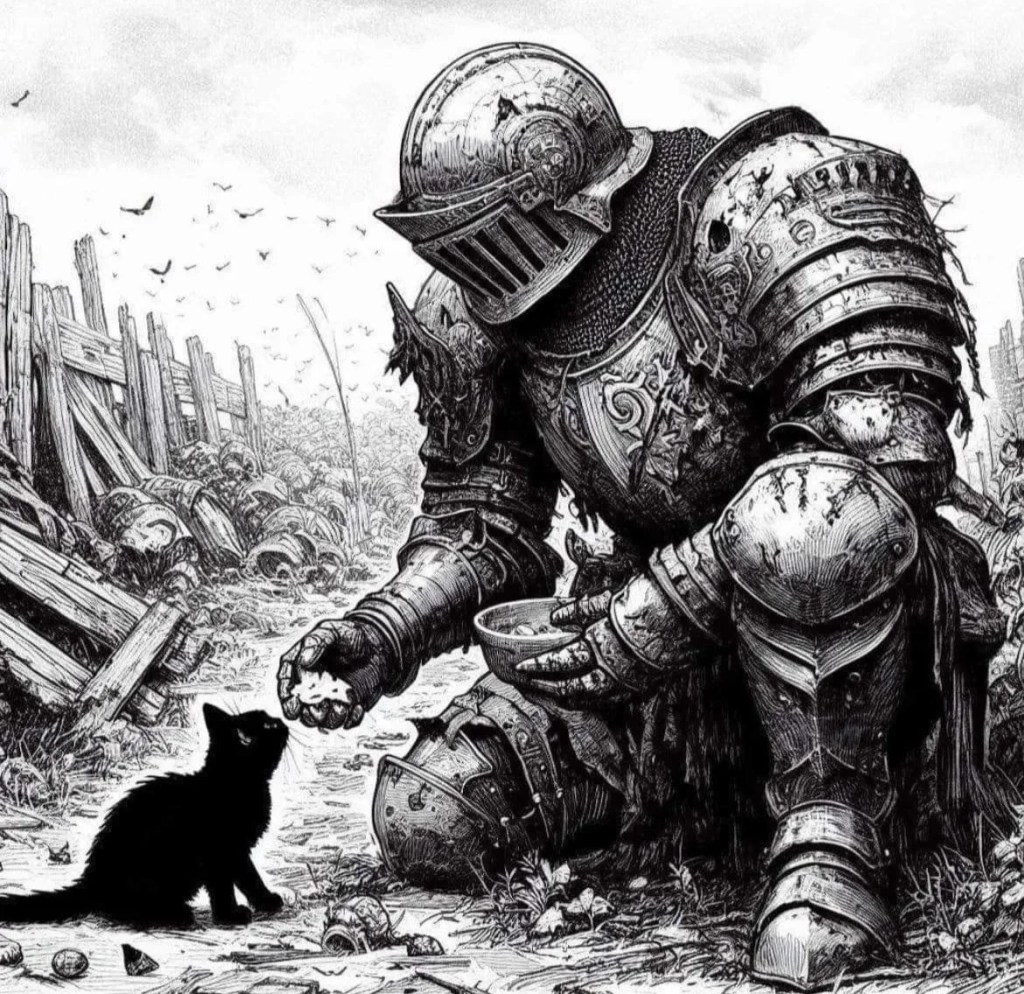
For context: the first meme is often used to make fun of people who defend stupid things. After some senators complained about Trump’s drone strikes on drug boats, the meme floated around with the text “Leave the narco-terrorists alone!” Maybe a genuine “nice” guy wouldn’t actually carry the knife, but he would be the type to be offended that any sort of conflict was happening at all—just let things happen, man.
On the flip side, a kind person might not wear armor or carry a weapon, but they are gentle and caring because they choose to be—it’s not a sign of weakness or passivity, but where they choose to direct their strength. Some kind people can become terrifying if you cross the wrong line.
Trying to Come to Some Sort of Point
This post is primarily meant to be a meditation of sorts, but I still think I would be making an irresponsible use of your time if I didn’t try to come to some sort of summary here.
Offense is a tool. It gets misused sometimes, but it’s at its best when used to seek after truth. Offense is also a way to measure social health, as well as the health of freedom of thought and speech; offense-resistant people are better adjusted and better capable of handling the discomfort of true-seeking, while offense-weak people are probably aware that they stand on shaky ground in some way.
I think the scripture said it best: truth is a two-edged sword. Let us strive to keep our swords sharp, that they fail not when we’re called to use them.
Enjoy this? I tend to write a lot more reviews than articles, but if you don’t want to miss any of my weekly blog posts, subscribe below.
I’m also an indie author. If you enjoy my writing, it might be worth your time to check out one of my novels. If you like some dark science fiction, check out The Failed Technomancer; for fans of fantasy, Inner Demon is what I’d recommend.
- Tanner aggressively strives to build bridges, affording “opponents” every accommodation and consideration that he possibly can. It’s a good rhetorical strategy, and it’s one that can be very effective, as it’s usually easiest to change people’s minds when you start with common ground. (Charlie Kirk was pretty good at that… Then he was shot.)
It’s a rhetorical strategy that I struggle with—for lack of a better term, to me it sometimes feels like calling a spade anything but a spade while still trying to get everyone to agree that it’s a spade, if that makes sense. I’ve told Tanner before that I find some of his discourse too thoughtful, too understanding, when the subject(s) of his conversation aren’t deserving of such accommodations; using his article on Rogers as an example, I thought he was creating meaning or context that didn’t actually exist within whatever he was commenting on, then attributing his corrections to the source as if they were always there. In conversation with Tanner, he described his intent as something along the lines of “Hey, here’s the 30% that we agree on—now let me correct that 70% of disagreement”—and I hope that works for his intended audience (which, strictly speaking, I’m not).
I’ve also told him that he risks being nice, which I consider a dirty word. (Niceness and kindness are often presented as synonyms, but one has a spine and one doesn’t.) To be clear, Tanner has a spine—I’ve seen it, but only metaphorically, thankfully—so it’s more accurate to state he has an overabundance of kindness, I suppose.
I shared all this with Tanner in advance, by the way. If this footnote is still in this essay, Tanner agreed that I wasn’t being unfair and that my risk of offending him had place in this essay exploring the value of offense. ↩︎ - Article: Uninclusive, Uninviting, Insensitive, Unkind (is the Ideal) ↩︎
- You can read one such list of compiled insults here. ↩︎
- Out of context, I find this insult really funny—but it has some weirdly deep meaning when you read into it. (Perhaps I shouldn’t be surprised; Jesus was the speaker, after all.) ↩︎
- Again, don’t miss the point if you don’t share my faith: replace these words with “objective reality” to arrive at the same destination. (And we would still agree, since I believe the word of God is objective reality.) ↩︎
- Oh boy, is that a different can of worms. Life, thought, and speech should not be arrested by whoever might be offended. ↩︎
- Full video here. While I consider the entire exchange extremely thought-provoking, I think 22:20–22:50 most relevant to my meditation on offense. Here are some more quotes that I think really contribute to this idea:
“You’re certainly willing to risk offending me in the pursuit of truth. Why should you have the right to do that? It’s been rather uncomfortable.”
“You get my point. You’re doing what you should do, which is digging a bit to see what the hell is going on… You’r exercising your freedom of speech to certainly risk offending me, and that’s fine… More power to you, as far as I’m concerned.” ↩︎ - Islam isn’t the only group guilty of this, but it is the group in my mind as I write this; I’m specifically thinking of the time South Park‘s creators received bomb threats for depicting the Prophet Mohammed in a bear costume. Here’s three sources: Wikipedia, The Guardian, and LA Times. I’m not calling any of these sources bastions of accurate, unbiased reporting, but they appear to have this story right. ↩︎
- Tangent 1: With this definition, I can say that Tanner is not a nice person and be both accurate and inoffensive. Tanner is a kind person.
Tangent 2: Paradoxically, but not surprisingly, the people who care the most about being nice often aren’t nice people, but push niceness on others as a way to control them. ↩︎
 Boo Ludlow
Leave a comment