
Deathbringer here. Subscribe to the channel or— *coughing* Oops, wait, wrong Deathbringer.
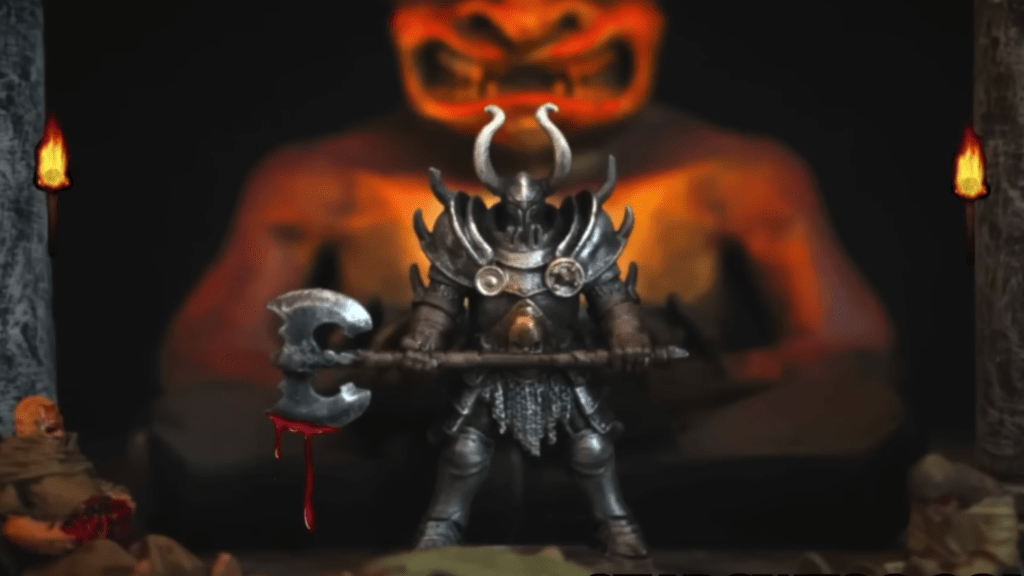
No, no—today we are finally discussing the indie novel Deathbringer, first book of the Spellsword Saga (Blake Carpenter), to find out if the book really kills it or not.
Overview of Deathbringer
What is It?
Inga Alenir is a Swordbearer. She is the latest in a long line of women to inherit a magical weapon called Deathbringer. She’s also dead, murdered on her wedding day by the ruthless and covetous noblewoman Yenda Avard, who steals the sword after killing Inga and her entire family.
And yet, some secrets won’t stay buried. Deathbringer has a will and a consciousness of its own, and even has the power to raise Inga from the dead for a short time. It warns her that she has one week to find and retrieve the sword before death reclaims her—permanently. With each day bringing her doom and final demise ever closer, Inga will have to see just how far she’s willing to go to achieve her vengeance.
Deathbringer is a compositional mix between the violent, grisly hunt for revenge in the film The Nightingale and the tale of Vasher and his talking sword Nightblood in Brandon Sanderson’s Warbreaker. Fans of dark fantasy, of tragic love stories and tales about seeking revenge against long odds will enjoy this debut novel by Blake Carpenter in the world of Agareth where a scorned, young widow fights back against the powerful elites that wronged her, and begins a journey that might turn the entire world against her.
Deathbringer is a lot of things—but at its core, Deathbringer is a love story.
That sounds corny to say, but the book opens with Inga Ivanova excited to be married—she loves her husband-to-be Pyotr more than anything else—and his death, her anguish over her slain love, drives her for the rest of the book and serves as the major focal point of the climax of her arc, as well as her emotional resolution.
Tragic love stories are still love stories, after all, and not all love stories require both partners to be present.1
Deathbringer is also a character-driven revenge novel set in a fantasy world. Its setting features magical, talking swords with lots of personality, lots of Russian names (and other elements), and some elements of industrialization (such as trains). It promises an expansive fantasy world that will unfold over the course of an epic saga, but Deathbringer itself happens within a relatively contained space. In fact, Deathbringer could be comfortably, and satisfyingly, read as a stand-alone by anyone who isn’t interested in committing to a massive series—and if that’s what you want, don’t read the epilogue, which promises a lot of interesting things to come. I recommend reading it, though, because I wanted more after reading this book.
Who Wrote It?
Blake Carpenter is self-described as an “Award-winning [indie] author. No, seriously.” After searching his profile on Goodreads, Amazon, and Gumroad, I’m still uncertain what that award (or those awards) are, but being the father of five kids is an amazing life reward, so my hat is off to Blake. I’ve only got two kids; I have no idea how he finds the time to write with five, nor how he’s managed to accumulate five children while only being six years old himself. (Ah… more on that in a few paragraphs.)
Blake Carpenter is also the author of Deathbringer‘s sequel, Lifebinder, as well as The Way of Mortals, which appears to be set in an entirely different (and Indian-inspired) universe from the former two books. He also has short stories published in several anthologies. You can buy his books directly through Gumroad, or through most of the other “standard” venders of your choice. (Including Amazon, now that the ‘Zon has decided to stop being cranky with his author account.)
Blake Carpenter also received some notoriety earlier this year through a Fandom Pulse article detailing the discrimination Blake received when attempting to traditionally publish The Way of Mortals. His experience, and tell-all, shined a light on industry corruption—and made a lot of people cranky, but the kind of people whose anger lets you know that you’re doing something right.
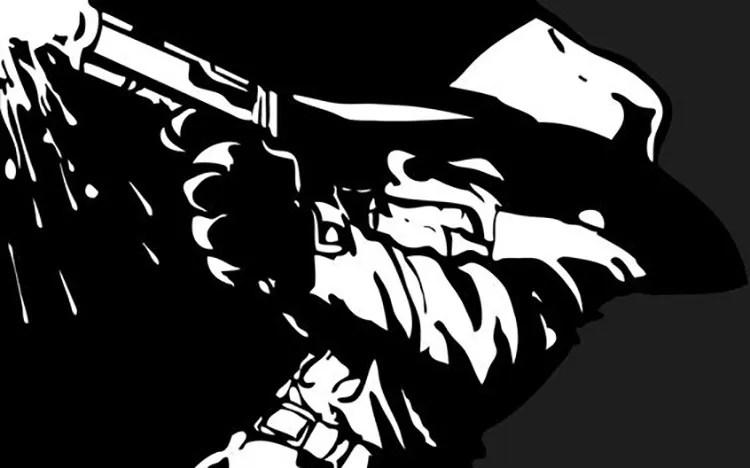
And finally… proving himself to be a true legend, a man of culture and taste, Blake Carpenter chooses to represent himself with an image of Tracer Bullet. Since I can’t find his face anywhere else, I can only assume that means he’s secretly a six-year-old noir detective who moonlights as a medieval knight (at least, judging from his Amazon author profile “headshot”2). The fact that he solves crime while writing and taking care of a family, at such a tender age—this man is going places.
Content Warnings
Some swearing. “B****” is the strongest word I remember reading. Swearing is infrequent and most often paired with very high emotions—such as one character describing another character who slaughtered the former’s family and community. (I usually give people a pass to be linguistically colorful in such situations; I wasn’t bothered.)
There is some sexual content, but… it’s a book? All right, let me be a little more specific. There is some innuendo, some reference to lovers slipping out into fields or haystacks to have a little fun, but the act itself is never described. Several characters are naked “onscreen” at various points, but I thought Blake was very effective in providing just enough description to give a scene proper impact and tone without becoming lewd or voyeuristic.
One huge caveat to the sexual content, though: there is a specific flashback scene between two characters that depicts the aftermath of a rape. One character, a man, was drugged; after raping him (and after he wakes up), a woman flaunts her body to revel in how much power she has over him.
Rape is, obviously, a hard pass for some folks no matter what, but to those who take it case-by-case I thought the scene was handled very well, in no way glorifying the rape or the rapist—it leaves the right kind of gross feeling in your mouth.3 In fact, I think Deathbringer would be a weaker story without that scene, at least without giving an equally compelling reason for the male character in question to be in comparably great need of vengeance.
Again, the rape itself is not depicted. The aftermath is.
There are also references to additional rapes involving the same characters, which don’t go into any details.
The No-spoilers Review
What I didn’t mention earlier is that Deathbringer is also a story about a princess in desperate need of saving, who is locked in a castle and guarded by a terrible monster, with a noble knight (or Italian plumber) off to rescue said princess.
Except, well, in this instance the princess is a talking sword with necromantic powers; the monster is a princess; and the noble knight is a freshly widowed young woman who died, got “better,” and must reclaim the sword in about a week or die for real this time.
It’s a pretty solid premise that hooked me before I even started reading.
So Deathbringer is a lot of things. Did it live up to each one of them?
Well, to be short, yes. I enjoyed it quite a bit, at least. I found the last third (ish) to be the strongest part of the book, but having a strong conclusion is usually considered a good thing, so that’s not a complaint.
A massive part of what makes Deathbringer work is the main character herself, Inga. Blake does a really good job at getting you into her head and helping you feel how broken she is without taking away her agency or otherwise reducing her to a state where she can’t (or won’t) do anything. I had a lot of sympathy for her as she wished she had just been left alone, was driven to avenge her slain love, and made difficult decisions that she nonetheless was unapologetic for, and I appreciated how her emotional arc resolved once she achieved her desires—more details on that in the full spoiler review.
I also really liked that Inga’s perspective chapters were all in first person, while all other viewpoint characters were in first person. Creative decisions like this rarely happen, at least in my experience,4 but I thought it added a lot of flavor and unique identity to Deathbringer.
I also think Blake accomplished something really difficult by making an intelligent magical sword that sticks out from the crowd. Deathbringer was a very fun character. His personality is nothing like Nightblood’s, one of Blake’s listed inspirations for this story, but the dread and awe that Deathbringer inspires, along with his storied (and dark) history, nonetheless strongly reminded me of the aforementioned intelligent sword, which happens to be my personal favorite. I found Deathbringer’s perspective sufficiently alien; his dry comments were occasionally hilarious—not because the sword itself is a jokester, but because of how differently it thinks about and values things compared to Inga.
The side characters were entertaining, and Kale did a great job in his role as the primary character after Inga (and, debatably, Deathbringer). The story rolled along at a good pace—I never felt it drag, although there were one or two hitches. And the world itself does an excellent job at being both familiar and fresh.
More on the world. Fantasy worlds that, thanks to magic and developing technology, prominently feature guns and swords at the same time, as well as some evidence of industrialization (such as trains), have always been a thing, but they are far less common than the “generic” medieval fantasy setting.5 Blake taking this more unique, but still familiar enough, general setting and making the world clearly Russian-inspired (or Slavic-inspired) put me in the delightful position of both feeling familiar with things in advance and having a lot of new and interesting things to discover. The hints at steel wrought with magic added to the wonder of the world, as did the slowly revealed information about the spellswords and their history. This isn’t a Sanderson book, however—or, in other words, there’s no magic-as-science going on here, at least as far as I can tell. A lot of things go unexplained, and that’s a good thing.
I particularly liked Blake’s implementation of a matriarchal society.
The Matriarchy
Have you ever read The Saga of Recluse, LE Modesitt Jr?6 When I think of matriarchal societies in fiction, I think of Recluse first, specifically The Towers of Sunset.7 This is probably because I read that book as a youth, thus making it one of my formative reads. I don’t actually like the matriarchal society in that book very much; as an adult, I find it very reductive, since men and women essentially swap roles and general personality traits 1:1, with a few quirks thrown in to reflect differences in anatomy.8 Obviously fantasy doesn’t have to fully adhere to reality, but natural differences in temperament and proclivities between the sexes definitely push that book much farther into the realm of fantasy for me, rather than feeling like it’s exploring what things might really be like if such a society existed in the real world.9
Deathbringer, for me, plays with that really interesting realm of fiction that feels like it’s exploring what could be if things were just a little different in the real world. At least, with this particular aspect of the book.
In Agareth, it’s a woman’s world, society is matriarchal, and women still feel like women.

Yes, the women of Agareth have had to widely adopt some traits more commonly considered masculine in order to fill traditionally masculine leadership roles, but I never felt like any the female character that I met was just a dude with ovaries and mammaries. Women still valued femininity, they still wore dresses, they still valued motherhood, common women still tended toward historically feminine labor, certain women still used sex, social or political influence, and other “soft” forces to nonetheless exercise real power (although strength and intimidation are still options to them—notably through the men loyal to them, most often), and so forth.
I even felt like they all thought like women, if that makes sense. There’s this one moment where Kale says something and the women around him roll their eyes at this illogical male and his strange view of the world—and it felt so natural. Having been in the position, many times before, where I find it difficult to get my wife to see my perspective because I think with maleness, and me her perspective because she thinks with femaleness, it really came across that both modes of thinking were being represented fairly and this just happened to be a world where, at least socially and culturally, the feminine side dominated as the assumed baseline.
This really realistic matriarchy spiderwebs out in interesting ways upon the world. Women tend to hold the leadership roles, but men are still physically larger and stronger than women, and that reality is, as an example, shown by having the vast majority of foot soldiers and guards still being men; this isn’t one of those examples of lazy worldbuilding where fifty percent (or more) of a nation’s army is female and no one questions the effect it would have on combat fitness (to say nothing of the nation’s ability to maintain healthy birthrates). As another example, there’s a very interesting moment at the end of the book where a specific ruler (a woman) is, in effect, told the only way to right a terrible wrong is to kill her only daughter. To her credit, she genuinely considers this option, apparently being that committed to justice, but has to reject it out of concern for the interests of her clan. She’s too old to have another daughter, after all, and her son can’t claim her mantle when she dies. A male ruler in this same position, with a comparable mindset, might have gritted his teeth and cut his son down, knowing he could still marry some young princess (or several young princesses) and produce a handful of heirs rapidly; the biological clock does not work that way for a female ruler, and it created a really interesting point of tragic, inevitable conflict between characters.
There still are women that come across as far more masculine than the average woman, of course—a bouncer at a bar early in the book comes to mind—but these women fit in as exceptions and add some character and flavor to the scenes they are in.
Seeing how men fit in this world was really interesting. Men still had ambition, physical strength, a higher level of comfort with risk, and so forth, compared to women.10 But they all still had roles to fulfill, had opportunities to advance and improve themselves (so far as I could tell), could act in areas that suited their natural strengths, and, while the highest levels of society were held for women only, I could still see how a man could find happiness and purpose in this world, rather than spending every day feeling frustrated at being held back (and slowly building a desire for a violent revolution). In fact, one male character—a very minor character in this book—appears to have amassed wealth and power normally only given to women in this world.
Hats off to Blake.
The Full Spoilers Review
Deathbringer begins on a homestead at the edge of civilization, far up North where winters are particularly deadly but there’s still enough of summer to grow crops. Inga Ivanova is about to get married to the love of her live, a man named Pyotr, and she wants nothing more than to spend the rest of her life with him, to raise children together, and to continue living on that homestead until the day she dies.
Then Inga’s mother reveals to her that she’s the secret heir of an aristocratic line that was nearly exterminated. Paired with that heritage is a magical sword with the name Deathbringer; upon the death of Inga’s mother, Inga will become the sword’s bearer. It’s a sword with a fabled and bloody history, filled with insanity and genocide and armies of the living dead, so Inga is very confused and not too keen about this revelation.
Though surprised, Inga decides none of this ultimately matters. After all, her plan is is for an idyllic, hardworking life with her husband and future children. If that means the sword gathers dust beneath her bed for all her days, so be it.
Of course, that all gets ruined when Yenda Avard rides up with a bunch of soldiers, confirms Inga’s true identity, and then kills every living person of the homestead, down to the last infant. Inga’s mother is shot through the chest; a saber pierces Inga’s heart and is ripped out her side; all corpses are piled in the barn, soldiers callously locking living animals in there, too, and the barn is set on fire. It’s total scorched earth.
Then Yenda collects Deathbringer and rides away.
But Inga isn’t dead yet. The power of Deathbringer has fled the sword, you see, and temporarily taken residence in her body, giving her life even though her heart no longer pumps. It also lets her know this existence is temporary: with the coming of the full moon, the sword’s power will fluctuate and she will die again (for good this time) if she can’t reclaim Deathbringer before then.
Deathbringer‘s opening is extremely solid. Pyotr is a ludicrously likable man, making it all the more of a gut punch when he’s slaughtered—along with everyone else Inga knows and loves. The stakes couldn’t be clearer, nor could Inga’s motivations be, and Inga’s very limited resources are soon made painfully clear; all this lays an extremely solid foundation upon which the rest of the book is built. Inga only somewhat cares about Deathbringer itself—she doesn’t really want her family’s legacy. She just wanted to be left alone. But her love burned bright enough for Pyotr that she feels little choice but to avenge him or lay down and die, and Pyotr would have wanted her to live.
Therefore, she must reclaim Deathbringer—and kill Yenda Avard.
The beginning of the book also left me with a big question, although one I didn’t realize I had until I learned a little more about the rules of the spellswords (and Deathbringer in particular): Why didn’t Inga die? Deathbringer has the ability to keep its bearer alive despite injury as extreme as a saber through the heart; why did he allow Inga’s mother to die, thus making Inga its bearer, and then kept her alive?
Books don’t need to explain everything—in fact, attempting to do so usually weakens a story. So I’m not pointing this out as a weakness in Deathbringer, but rather as one of the many little open ends that might strike your curiosity as you read. For this question, I think the answer is simple: Inga’s mother likely commanded the sword to allow her to die so that it could save Inga’s life. Perhaps that isn’t the case and Deathbringer made the choice; perhaps I forgot a small part of the book and this question was answered; but Inga’s mother seemed the type of person who would do anything for the health and well-being of her daughter. I wouldn’t put it past her to choose her daughter’s life over her own.
Anyway. Following this is a good, long section of talking and traveling. Deathbringer is able to communicate with Inga through dreams while afar and knows where it is, so it tells Inga to travel to the Avardi capital11 to reclaim it.12 To do so, Inga travels to a local town, makes some enemies, boards a train, is temporarily waylaid by a local garrison, and then rides to the Avardi capital. There, she makes more enemies, meets with the matriarch of the Isrodel clan (who maintain a tense peace with the Avards), and then gets arrested by the matriarch of the Avardi and put in a secret prison. This is the fun-and-games part of the book, the middle that is (thankfully) not mushy.
The single most impactful thing that happens (with consequences that just keep unfolding) is Inga meeting, and ultimately teaming up, with Kale. Other important things happen, too—Inga learns a little about the nature of Deathbringer, she has encounters with Avardi police, etc—but Kale has a cascading effect on the rest of the book that none of the other elements have. He’s a fulcrum. And that deserves some unpacking.
Kale is an Isrodel—and he is the betrothed of Yenda Avard. He sees his life as more-or-less meaningless—and, even if it has meaning, that meaning has little to do with him as a person. He had no choice in his betrothal to Yenda—he sees himself as a stud to give her children in that arrangement, as well as a political pawn in a treaty. He is often slow or hesitant to react; I interpret his passivity as a response to all of these currents in his life that are far beyond his control. Note that when I describe him as passive, I don’t mean he never acts—but he always recognizes that he’s subordinate to the women around him. There’s normally a lack of confidence to him when he does act.
Kale also is the rape victim that I mentioned earlier. Yenda, his wife-to-be, is the aggressor. This isn’t revealed to Inga until later in the book, but some of Kale’s actions and attitudes early on make a lot more sense with this context. He wants justice to come to his betrothed, but he also deeply fears her. The reason he’s out in the middle of nowhere when Inga discovers him is because he’s trying to get away from his future wife—and current abuser—for as long as he can. But he knows he can’t stay away forever. Yenda is far too controlling to allow that.
Finally, Kale killed Inga. It was at Yenda’s command—and she watched him do it—and he was so sickened by the act that, unlike the rest of Yenda’s soldiers, he did not take part in the butchery that followed—but he is, nonetheless, the direct, physical cause of Inga’s death.
Kale is really interesting. He’s probably my favorite character.
Inga accidentally meets Kale in a bar and, recognizing his blazing red hair, decides to kill him as a start to her vengeance. She tracks him down to an alley, then his shockingly blue eyes—which remind her so strongly of Pyotr’s—hold her back from immediately finishing the deed. This is followed by Kale accepting his fate, almost challenging Inga to kill him, but also defending himself by stating he only killed her—or thought he did—and all this makes Inga pause. She wants him dead, but something in her won’t let her.
The same can’t be said for other Avardi soldiers who catch up and attempt to rescue Kale, who end up slaughtered, forcing Inga to leave town as quickly as possible. Initially seeing Kale as a resource to help her get to the Avardi capital, Inga takes Kale with him (“I own you now” is how she words their relationship), and Kale essentially becomes her guide from that point forward.
The relationship between Kale and Inga is strange. I will admit, Inga not killing Kale the moment she had the chance was a… pill for me to swallow, initially. I was a little skeptical. But the relationship that formed naturally between the two of them felt very real and is what ultimately persuaded me that the decision Inga had made was both believable and in-character.
Kale’s presence is also likely the only reason Inga succeeds in her quest, which is another point going in his favor.13
Initially, Kale is a stranger, but he’s a friendly stranger. The two get to know each other and Inga eventually feels deep pain for how Kale has suffered, growing to care for him on some level—there were moments where I thought this book was promising a romantic pairing, but, if so, such a promise wasn’t fulfilled in this book. While avoiding Avardi soldiers and spies, Kale introduces Inga to his sister, the Isrodel matriarch, who, at the end of the novel, proves to be an ally to Inga.
Most important of all, Kale testifies to the Avardi matriarch—Yenda the Elder, mother of Yenda who killed Inga—of Yenda’s sins.
Let’s shift focus to the Avards for a moment. Yenda is a real nasty piece of work, pretty much solely motivated by collected Deathbringer and binding it to her—no matter how many people she has to kill to get there. Blake does an exceptional job of making me hate her. I didn’t find her a particularly layered villain, but this isn’t the kind of story that calls for such a thing—Inga and Kale are already good enough onions.
Yenda the Elder, on the other hand, gets significantly less focus than the rest of the characters do, but what you do learn of her are a few crucial details that powerfully influence some of the most defining moments of Deathbringer:
- Yenda the Elder is fiercely loyal to her clan and family.
- Yenda the Elder deeply cares about doing what’s right—or, at least, acting strictly lawfully, and righting wrongs, even those committed by her own.
Several things alert Yenda the Elder to the possibility that her daughter has been committing serious evils—first among them, bringing home a sword rumored to always bring doom upon whoever wields it—but Kale’s testimony is what really seals the deal for her that her daughter has truly, royally, intentionally screwed up, and that it’s her duty as the Avardi Matriarch to make thing right, no matter how much it hurts.
Because of these things, Yenda the Elder acts behind her daughter’s back and commands her son to, upon capturing Inga, pretend to kill her and bring her to a secret prison so Yenda the Elder can interrogate her. If it weren’t for these things, Yenda the Elder would likely have ignored her daughter’s actions and allowed Inga to be killed.
Go Kale. It’s thanks to you that the fun-and-games portion of the book can draw to a close not with Inga’s second death, but with Inga being dragged into a prison in the heart of the Avardi home fortress—where Deathbringer is stored—marking the beginning of the end.
And the best part of the book.
Imprisoned, stripped of literally all of her physical resources—including her clothes—and chained to a wall, all hope seems lost for Inga. That night is the night of the full moon, the night Inga will die—permanently, this time—if she can’t reclaim Deathbringer before then. Her few allies think she’s dead. No one is coming to save her.
But by bringing her into the Avardi fortress, not all that far from where Yenda the Younger is keeping Deathbringer, Inga is able to more fully draw upon the sword’s powers. And her inhibitions against using the sword’s necromantic magic have largely been spent by this point.
This is where the most fun, and most intense, part of the book begins. I was on the edge of my seat for a huge chunk of it. In a nearby cell is a corpse; Inga animates it with the power of Deathbringer, has it kill another guard, uses the two to free her from her cell, and continues forward, freeing prisoners, killing guards and raising their bodies, and in an alarming number of ways generating the aura of the final boss of a video game. Chaos and bloodshed follows; Inga is ultimately left alone when she finds the Avards, with Kale, at the top of their home, their guards slain, the sole obstacles standing between Inga and Deathbringer.
And Yenda the Elder tries to parlay. It’s such a deliciously tragic moment.
Yenda the Elder clearly wants to do what’s right. Things can’t be fully fixed, but she wants to do all within her power to make things as right as they can be, up to and including giving up a significant portion of her lands and treasury to Inga, as well as offering to return Deathbringer. Inga remains firm: the only thing that will bring justice to all the evil that has been committed is Yenda the Younger’s death.
And Yenda the Elder simply can’t grant that. Even if she were willing to accept that her daughter was beyond help and slay her, she is too old to have more children. Her bloodline dies with Yenda the Younger,14 and she has a responsibility to her clan that, like it or not, passes through Yenda the Younger. So Yenda the Elder, wielding the spellsword Frostbite, challenges Inga in a duel to the death.
All this, alone, is tragic enough, and makes conflict totally inevitable. Stakes are high, emotions are higher—and so is my personal hate for Yenda the Younger, as she clings to Deathbringer and pettily insists it’s hers by right. A sort of stole-it-fair-and-square situation.
But then Yenda the Younger kills her mother.
I really wasn’t certain I could hate Yenda the Younger more than I did before that moment, but Blake pulled it off. Yenda kills her mother—in front of her brother and betrothed—and claims Frostbite, then continues the duel with Inga.
Inga is rapidly weakening as the magic sustaining her fades. Yenda is a better swordswoman than she is and Yenda is armed with her family’s magical sword, while Inga only has a common saber. It’s utterly hopeless for Inga.
But then Inga animates Yenda the Elder, and her not being “dead” is enough to confuse the magic determining Frostbite’s bearer. Yenda the Younger loses her magical strength and Inga strikes her down.
And feels totally empty inside afterward.
Characters finally achieving vengeance and discovering emptiness on the other side is nothing new in fiction. (I discussed it at length in my review of The Princess Bride.) But great writing usually isn’t shown in finding something nobody has done before, but rather in doing something known and doing it extremely well, which often is paired with making the familiar fresh again. And I think Blake pulled that off here. The pained tug between Inga feeling relief that her quest was over, feeling totally empty because all she has lost will never be restored to her, finally being able to allow the pain of losing Pyotr and so many others to flow over her so that she can fully process these emotions—it all hits like a brick, then flows like water.
If you read it, you’ll know what I mean.
So Inga takes her two swords—the sword of her ancestral line, Deathbringer, and the sword of the line she just ended, Frostbite—and, with some Isrodel help, heads home. Along the way, she has a dream that helps her find some much-needed closure with her mother and with Pyotr, but she still has a lot of healing left to do.
The end.
Well. It’s The End if you want to read this book as a standalone. But I don’t recommend that, because Lifebringer looks really promising, Bloodlust isn’t too far off from being finished—and Deathbringer‘s epilogue is really, really exciting, promising that some crusader-like characters are going to try and hunt Inga down for the crime of bearing Deathbringer.
The epilogue also promises that something very unique and interesting is going on with Golova, who shows up at the beginning of Inga’s journey and gets an odd amount of focus for a seemingly one-and-done character. I didn’t mention her earlier because her scene is brief and then she disappears until the epilogue—but said epilogue makes it clear that she’s involved in something bigger than I could have possibly guessed when she was introduced.
If I had one complaint—which I don’t, because the end of Deathbringer felt very satisfying—it’s that I wished for a little more of an denouement for Kale, preferably a hopeful one, but I suspect the lack of focus on him is because he’s not the protagonist of this book and, I hope, he’s still got a lot more to do in future books.
I’m keeping an eye on Blake Carpenter’s future work.
Wrap-up (No Spoilers)
Deathbringer is a pretty straightforward, enjoyable fantasy novel that delivers on what it promises. The conflict is compelling, the characters are engaging, and the world promises to be a place I look forward to getting lost in once more. Deathbringer has my recommendation!
Enjoyed this review? Consider subscribing below!
If you’re already a fan of Deathbringer, or you’re just on the hunt for some good fantasy adventure with moments of grit and a unique setting, check out my book, Inner Demon. You can purchase a copy at the former link, or give it a taste test by reading a few chapters online here.
- At the same time, Deathbringer shouldn’t be marketed (solely, anyway) as a love story. Most people who read that description will expect Pride and Prejudice (if they have taste), certain romantasy novels (if they want porn), or The Princess Bride (if they value only the highest of culture and sharpest of wits). Deathbringer is very much not Pride and Prejudice, romantasy (or porn), nor is it The Princess Bride—it is its own story with its own unique strengths to bring to the table. ↩︎
- Which is yet another joke, known only to those who look at his Amazon author profile, assuming it hasn’t changed since the time of this being posted. ↩︎
- I could go into an entirely different conversation about the impact of rape and sexual assault on men (and male characters) and how audiences tend to react to it in a much more muted fashion than sexual violence against female characters—I’m a little bit ashamed to admit that I didn’t even think of the male character in question as having been raped, at least initially. That’s not the purpose of this review, however. ↩︎
- I last remember reading a book that made this same decision with The Bartimaeus Trilogy… and those were published quite a while ago. ↩︎
- I think that trend is changing as time goes on, but I don’t have any stats to back it up. ↩︎
- Literally the most author author name to ever exist. I love it. Also, as an aside, I highly recommend the Recluse books, and LE Modesitt in general has written some fantastic stuff. ↩︎
- I probably think of RA Salvatore’s Drizz’t books second, but drow society isn’t really relevant to this conversation, not unless we really want to assume that women, if society were centered around them as matriarchs, would immediately start worshipping demons and rule with blood and cruelty. ↩︎
- LE Modesitt is a great author and he did a fantastic job with the Recluse books; none of this is a knock on Recluse in general. ↩︎
- Before anyone complains that matriarchal societies exist in the real world, maybe I should clarify: Existed successfully. Existed and continued to exist, even today. Existed and progressed beyond a tribal culture and primitive technologies. Matriarchal societies have a terrible real-world performance report. ↩︎
- In general; obviously individuals are individuals and will fall on different points of the bell curve. ↩︎
- Looking up names is such a pain in an ebook. If I had a print copy I’d be flipping through it right now to be a little more specific, but I guess I’m lazy, because ebooks are great for casual reading and not for research or reminders and I don’t care enough to overcome that hurdle for one name. ↩︎
- I think of Deathbringer as a “he,” although I remember the book either referring to the sword as “it” or avoiding pronouns. Again, I’m not popping open the ebook and rooting around for such a minor thing. ↩︎
- Yes, if Kale was inexplicably cut from the book Blake would have entirely rewritten things such that Inga still succeeded in her quest—that’s beside the point. If events had generally transpired as written, Kale is the reason Inga gets the chance to kill Yenda rather than getting executed in the street, as will be revealed later. ↩︎
- Yes, she has a son, but this is a matriarchal society, so his blood is meaningless as far as inheritance is concerned. Also, the magical sword of this world only pass down to daughters, so the Avard bloodline would lose access to its greatest treasure if Yenda the Younger were to die and Ruslan were to attempt to lead the clan. ↩︎


 Boo Ludlow
Leave a reply to Boo Ludlow Cancel reply