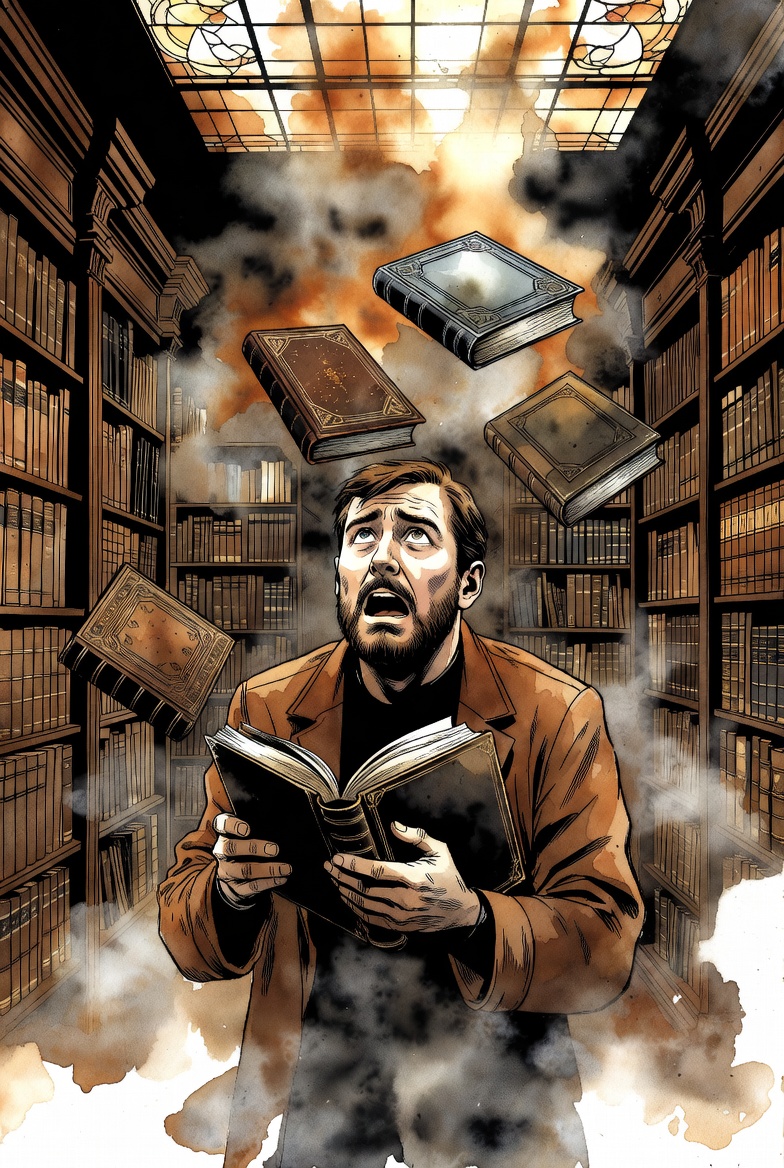
My favorite Christmas movie of all time is called Klaus. It’s a gorgeous animated movie that blends 2D and 3D very effectively; the voice acting is excellent, the music and sound design evocative (even the modern single awkwardly inserted near the end), and the story never fails to deeply touch my heart. Its messages of generosity and self-sacrifice are timeless, and I don’t even mind (much) that the brief moment where most of Jasper’s friends turn on him is a little forced—the whole of Klaus is greater than the sum of its parts. I look forward to watching this unique origin story for Santa Claus every year.
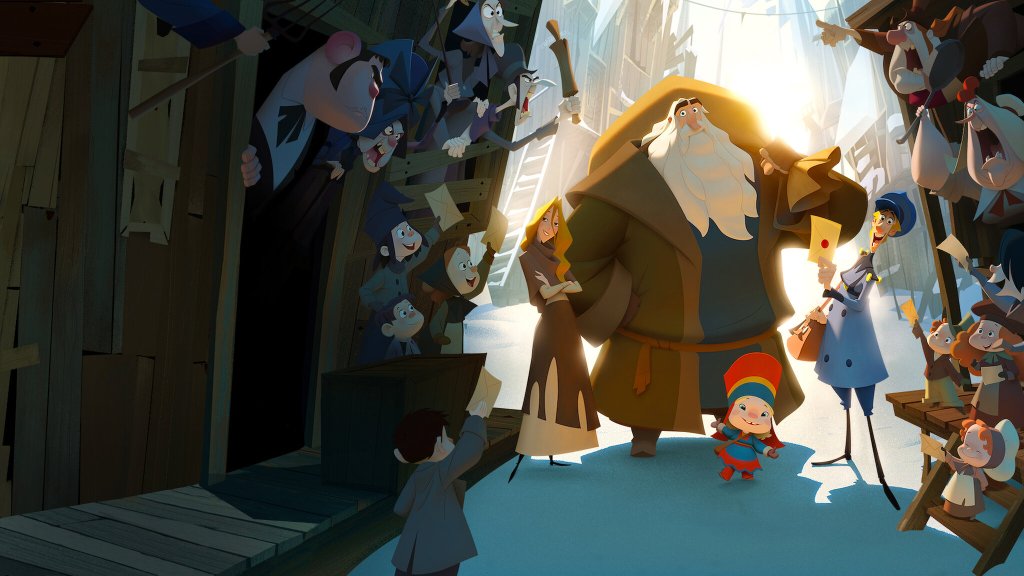
Unfortunately, Klaus is owned by the big red, evil N—not Nintendo (we’ll bring them up again later), but Netflix.

It’s very rare for anything produced or distributed by Netflix to get a physical release. I once found some DVDs for Stranger Things,1 but I think that was a product tie-in to Stranger Things 80s nostalgia—it certainly wasn’t Netflix being consumer-friendly. Klaus? It has no such nostalgic connection to justify that kind of “merch,” even if the movie had Stranger Things–level hype encouraging Netflix to milk it for all it’s worth. No, Klaus will only ever exist in the nebulous realm of Netflix’s servers, hidden in strings of data and on the other side of a monthly paywall.
And thinking about this really bums me out. If the internet goes out, no Klaus. If Netflix closes down, no Klaus.2 If I don’t pay for Netflix, or can’t get a free trial that year, no Klaus.
This all really makes me miss owning things. It makes me miss being able to pay once for something and own it forever, whether physically or in a digital file on my computer. It makes me miss set prices, consistency, and reliability.
I don’t like streaming services as a rule—I think they are a horrible waste of time and money. Luxury, internet-enabled services in general, really. I don’t like that the money I hand over doesn’t go directly to support something I like, but gets absorbed into the nebulous coffers of an entity that may or may not care to use my watch metrics to justify what it next produces.3 I don’t like that once I cut off the service I’m left with nothing, no matter how much I poured into it over the months and years. I don’t like that most services leave me feeling like I dumped a lot of money and time into a bottomless pit—or maybe a portal directly to hell, depending on the service.
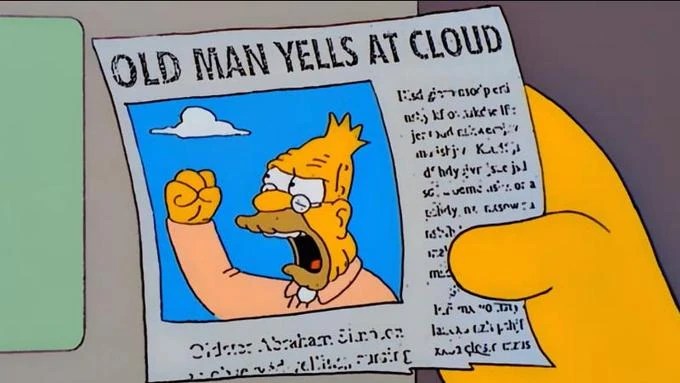
Yeah, start posting comments with old_man_yells_cloud.jpeg attached. Actually, you know what, I’ll beat you to the meme:
Listen, I understand the advantages of such services, for the right person. Streaming services let you watch theoretically unlimited television every month; gaming services do the same for playing video games, and Kindle Unlimited and Kobo Plus do the same for reading novels. Once you’ve paid for a service, giving anything available on it a try has almost no investment cost, and sometimes that allows you to discover things you never would have otherwise. That’s what happened for me with Frieren and Delicious in Dungeon.
But I spend too much time touching grass to invest the time into a service to justify its costs—direct and hidden—and that distance has changed my perspective of services. I’m no longer convinced that the trade-offs are worth it, and I don’t think you should, either.
It’s common knowledge, and a common complaint, that most everything on Netflix effectively disappears from tangible reality forever—Klaus as an example. I already discussed that. But less than ten percent of what’s produced by streaming services is ever available off-service, so this is far from just a Netflix issue. You love this original Disney series? I hope you plan on shelling out for Disney+ for a lifetime, assuming you ever want to rewatch it, or share it with a friend, or a child. Same goes for Peacock, Paramount+, Prime, etc.
“You’ll own nothing and be happy.”
This horrifically dystopian quote brought to you by Ida Auken of the evil, elite, and globalist World Economic Forum.
Oh, and hope that said service never just deletes it. Maybe for a tax write-off. Maybe to save server costs. Maybe for reasons never explained. You don’t have any control of that, and they don’t really care what your thoughts on the matter are.4
Even if the series remains accessible, its value (in the eyes of the platform) is still reduced to just being content: flavorless, shapeless, tasteless content mixed in with the general content pile.
On the other hand, I own physical and digital books and DVDs, many for years and years (paid for but once), and I can freely hand them over to a friend whenever I want. My wife owns a GameCube and some legendary games, and I bought her an adaptor to a modern TV; if she ever feels like sharing the original Animal Crossing with our daughters, we can plug it in that same hour without any hassle or fuss. Such luxuries become legacies and connection points, the opposite of disposable; value is preserved and cherished, aging like wine when stored,5 rather than going up in smoke.
This issue isn’t just limited to services. No, oblique promises that online services and other modernizations won’t affect direct ownership are being proven to be illusory as modern companies make accessing the stuff you already own a lot more difficult. As an example, Android is changing long-term policies and practices to make sideloading “high-friction”—not impossible, but difficult enough that most people won’t, or can’t, bother with it. As another example, Nintendo has started selling physical video game cartridges that don’t actually contain the games on them, but a link to download the game—which ends up being the worst of all worlds.6
This issue extends into the ebook world as well, of course. In the United States, Amazon has all but a total monopoly on the market, which means they can do basically whatever they want with the ebooks they sell—which includes saying that you don’t actually own your ebooks.
This announcement went out late 2025, but, essentially, Amazon said that they don’t sell ebooks, they sell licenses to access ebooks (and always have, despite users “buying” instead of “leasing” purchases), which can be revoked by Amazon at any time and for any reason.7 This also came with Amazon announcing that ebooks could no longer be downloaded, which meant if you purchased your ebooks through Amazon but weren’t using a Kindle, tough luck—read ’em online using your eye-destroying blue-light screens, I guess.
Oh yes, I am very happy that I own nothing. Very happy indeed.
This policy was slightly walked back, or perhaps Amazon held in reserve some slightly good news to take the edge off the bad news after it had aired out for a bit—if an ebook is sold on Amazon without digital rights management (DRM), then you can download it and actually possess it as an file on your local computer, which Amazon can’t capriciously delete from your library.8 This also means you can sideload it to another ereader, share it with friends—don’t do so by duplicating the file—etc.
To use metaphor, we had a pie, and it was a great pie. Amazon took that pie away from everyone who didn’t want to eat that pie exclusively in-store, and using Amazon plates and utensils, then later gave back a small slice of that pie while pretending that made everything square again.
Here’s the salt on the wound: Amazon won’t tell you which ebooks are sold without DRM, and, to my knowledge, most authors and publishers haven’t decided to take the initiative and do so in their book descriptions or on their own websites. You don’t get to know in advance if you are allowed to actually own the ebook you just bought; you have to buy it and find out the hard way.
Maybe Amazon will let you buy the pie and walk out of the store with it to enjoy at home. Maybe not. You won’t know until after checkout.

At least refunds are sometimes allowed, but it’s still an extremely customer-unfriendly process.
If this issue were limited to Amazon, maybe I wouldn’t be feeling so down on the whole situation, but Kobo also won’t tell you in advance whether or not a book you purchased has DRM; it’s still a gamble. A point in Kobo’s favor, at least that company will let you download the book, even with DRM, so at least you can remove said DRM if you want to. A point goes to Kobo over Amazon on this one, but they are both still in the negatives.
To my knowledge, all ebook vendors function this way, unfortunately.
If you feel so inspired, and have been burned by these things, tell me in the comments your experiences. For me? I feel like I can’t buy ebooks anymore, and that’s left me feeling pretty lost. I mean, I often literally can’t, since if I purchase an ebook that I can’t download and sideload to my ereader I literally don’t own it, and the company I bought the license from can remove my right to read it at any time—I’m leasing, not buying, whatever legal terminology Amazon uses to obfuscate that fact. The ebooks that I could download and actually own don’t make themselves known, and the authors I’ve reached out to have yet to respond, and I’m not willing to bet my limited funds for luxury and entertainment purchase on actually being able to access the book I might have bought.
This has pushed me really heavily toward the public domain, actually. As far as books go, at the time of writing, I’m working my way through A Princess of Mars, and I look forward to giving Tarzan and Conan a try next. As far as games go, I’m emulating and playing fan games most of all. And for movies and TV, I might just stop watching those once I can no longer borrow streaming passwords from anyone. It’s not like Redbox is an option anymore, and a lot of what I’m interested in doesn’t have physical releases.

That said, these limits haven’t lessened my horizons, but shifted them. I’m more likely to directly support authors by buying directly from their websites, when available. I’m more likely to read old, and excellent, novels that I might not have considered otherwise, and I’m more likely to start visiting the library again. I’m more likely to experience old games and fan creations that, likewise, I might have overlooked.
I’m also getting a better vision of an internet term that—well, pardon my French, but a term that has a swear word in it that I generally prefer not to use, but it describes the state of a lot of modern things really well: “enshittification.” This term is largely used to describe the degradation of online platforms, but it absolutely can be applied more broadly.
Back to being an old man yelling at a cloud—I remember when video games were finished, and polished, when I purchased them. I remember when television typically had twenty or more episodes per season, and a season per year. I remember when I owned the books and movies I bought.
I remember when the cultural sentiment was that the things being produced, and pushed in the mainstream, were generally good, valuable, and worth keeping, rather than slop, ammo for culture warring, or disposable content.
I think the removal of convenient, direct ownership, or at least the consistent option of direct ownership, contributes to all this.9 After all, who cares if the majority of the options on Disney+ are absolutely not worth your time when you’re going to spend at least half of your TV time flipping through options and deciding what to watch, anyway? If you’re anything like me and my wife, you probably have a whole lot of things on your “to-watch” list that will never get watched—they were interesting enough to add to the list, but that’s the end of it.
But that can’t be the end of this story, because there’s a huge, massive counterpoint to not really owning things being a problem, and that’s Steam.
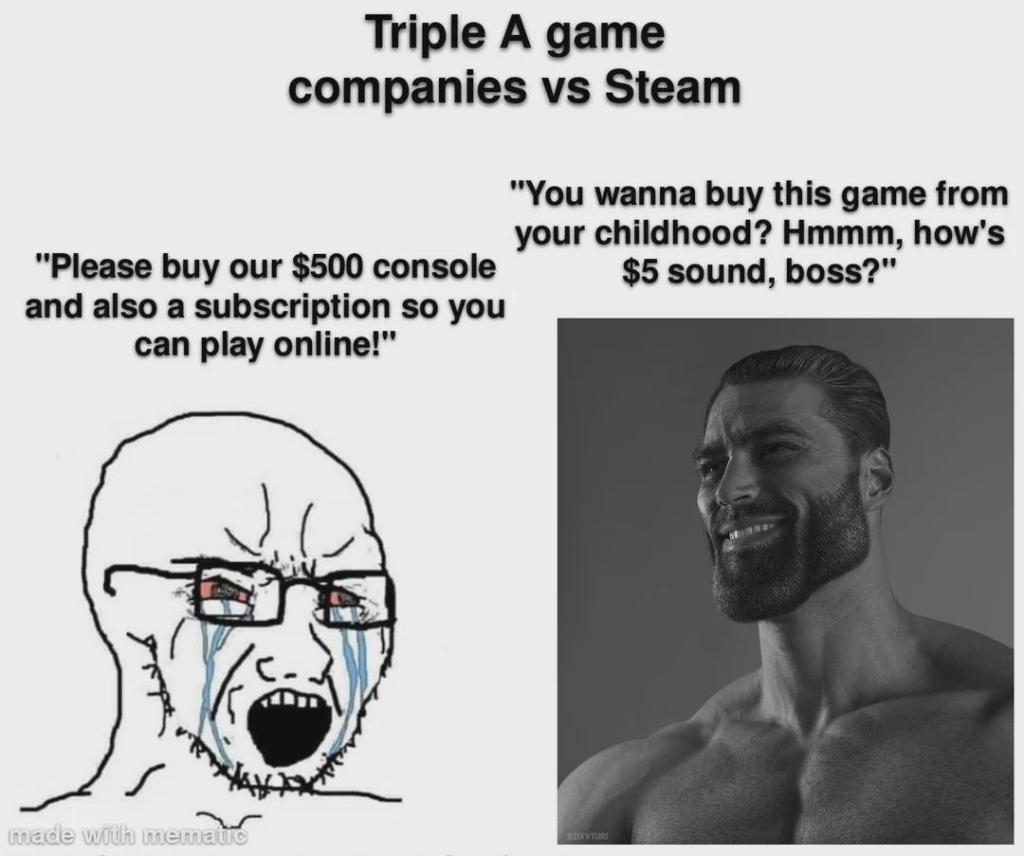
Steam, as a company, might have more goodwill amassed than most other tech companies combined. Epic Games, a rival to Steam, literally gives games away for free every month, and still can’t persuade many gamers to leave Steam—they’d rather stick around for the better ecosystem, better general management, ridiculously customer-friendly approach, and frequent, hefty sales.
I’m in this crowd: I love Steam. I’m a happy SteamDeck owner, and I wouldn’t be surprised if I get a SteamMachine, etc, down the line. (Not at launch, that’s for sure.)
I got mad at Amazon and swore off buying books I couldn’t download when Amazon made their announcement; from the beginning I’ve been happily buying games on Steam, which I’m pretty sure I can only ever access through Steam, and I didn’t feel threatened when Steam changed their language to state that, in compliance with California law, purchases on their platform were for licenses to play games, not for the games themselves. I’ll admit I wasn’t excited, but I still knew I was going to stick with Steam.
And it’s all because of Gabe Newell.
Does a more customer-oriented mindset exist in the tech world? The man refuses to engage in the self-destructive practices of the rest of the industry. He refuses to charge for the ability to play online. He doesn’t have to encourage as many aggressive sales as he does, but sales have remained a core part of Steam’s identity. He’s even pushing forward aggressively customer-friendly developments in Linux through the SteamDeck and SteamMachine, creating a path out from under Microsoft’s expensive, heavy hand..

Everything is about the customer with Gabe. Even when asked about piracy, his response was, “Piracy is almost always a service problem and not a pricing problem.” In other words, provide a service better than piracy and the pirate will become a customer—everyone is Gabe’s customer!
Silksong was an excellent example of that mindset, though it’s not a Steam original game—but it did sell like crazy on the platform. The game came out and pirates actively discouraged each other from pirating the game. Go TeamCherry!
I don’t bring the above up specifically to glaze Steam and Gabe Newell, but to provide an example of how modern services and conveniences—and not truly owning certain luxuries—can be done right, in a way that makes customers feel empowered instead of cheated, and without services degrading over time. After all, Steam controls about three-fourths of the digital game market, and has for a long time. That’s not even as much as Amazon controls of the ebook market, but it’s still enough dominance that Steam’s competitors complain of monopoly while gamers willingly flock to Steam and defend Steam. If Gabe wanted the company to slowly degrade services to cut costs while retaining revenue, as so many other companies are doing, he absolutely could have, but that’s just not happening.
Maybe the existence of services and the difficulty of directly owning physical or digital media isn’t the real issue. Maybe the services providers are. I can’t tell you how many times I’ve said to myself, “I wish there existed a Steam of ebooks.”
Tech companies—and many other institutions (including many of government identity or direct connection, but that’s beyond the scope of this post)—have been mistreating people for decades now, and erosion of trust and satisfaction is a hefty bill that eventually has to be paid. Customers are taken for granted; it’s assumed they will always be there, ready to support what’s advertised as “the next big thing” in droves, ready to empty out their wallets for steadily inflating prices. Then, when a book flops or the box office craters or a game has no audience, the audience is blamed, instead of unchecked costs and scope (and other problems) in various industries.
The people we give our money to have forgotten who is in charge. They act like we owe them, not the other way around.

And, well, when Nintendo forges the path toward games—and not even solely first-party titles—costing anywhere from $70 to $100, on a console that seems to have forgotten what the definition of “budget” is, and is rewarded with incredible sales despite customer-unfriendly practices (see the aforementioned empty game cartridges, among other things)… maybe those companies are right? Not in reality, of course—but in practice? Absolutely.
Maybe this is all driven by luxury being seen as necessity by so many in the United States. Tell someone that you don’t watch TV anymore, or that you stopped playing video games because you’d rather go dig up some mud with your two-year-old, and they look at you like you’re crazy. Tell them that they don’t need such things and they will act like you suggested they give up air.
Prices are only going to go up, it seems, across most of various industries. Perhaps we’re approaching a breaking point where people will start to actually recognize what’s a necessity, and what isn’t—some people are already reporting online having to choose between lunch and a streaming service, rent and a game console. Perhaps, perhaps not. I suppose we’ll see what priorities generally win out.
But, for me—as disappointing as it is to say, I don’t need Klaus. I really, really like Klaus. I wish I could have it be a permanent fixture in my holidays in a way that doesn’t require me to hold my nose and let Netflix in the door. But, perhaps my inability to let go, is the real problem; I’m the problem for allowing myself to remain in indecision over whether or not getting cocooned in the webbing of a streaming service’s ecosystem is worth having a bit of life regularly sucked out of me.
Klaus is an undeserved casualty. It’s a movie made with real heart, that possesses real soul. But, so long as the entity that owns it treats it as mere content, it may be forced to suffer the same fate as all other unvalued content.
Goodbye, Klaus. I won’t complain if we meet again, but I also won’t specifically plan for it.
Enjoyed this article? Consider subscribing below so you never miss an update! You can also follow me on X.
I’m an indie author. If you’re interested in finding a new book to read—purchasable without DRM, and from a variety of websites—please consider my post-apocalyptic science fiction novel The Failed Technomancer, or my found family fantasy, Inner Demon. Buying my books is also a great way to support me so I can keep writing.
- Looks like Season 1 of this “collector’s set” might still exist on Amazon. More on Amazon later… ↩︎
- Unless whoever buys up Netflix cares enough to keep the movie available, I suppose… Not always guaranteed. ↩︎
- Let’s be real, it’s going to keep doing whatever it wants and blame audiences if a pet project fails. ↩︎
- There’s also the inconvenience of having a beloved, non-original show switch services, which isn’t the same sort of death sentences as the previous happenings, but is somehow all the more annoying. ↩︎
- No, I’m not saying everything old is excellent. The GameCube, as an example, had a lot of crappy games on it. Not every reread book ages well with the reader. If that’s what you’re objecting to right now, you’re missing the point.
(Some experiences do only get better with age, though.) ↩︎ - Physical game cartridges that only contain game keys still require the cartridge to be inserted in the machine to play the game—unlike downloadable games. They take as much system memory space as a downloaded game and require an internet connection to download said game the first time you play it—both unlike traditional cartridge games. That internet connection issue also means the cartridge will be unable to allow you to download the game, even with the cartridge inserted, when Nintendo one day shuts down that server, unlike a traditional cartridge game. ↩︎
- Sony isn’t Amazon, but Sony has deleted games off of users’ PlayStations without warning or permission. These companies absolutely have the power to do this and will exercise it when it benefits them. ↩︎
- So far as I know. ↩︎
- I don’t know if it’s a symptom or a cause, but it’s an important part of the picture. ↩︎


Leave a Reply