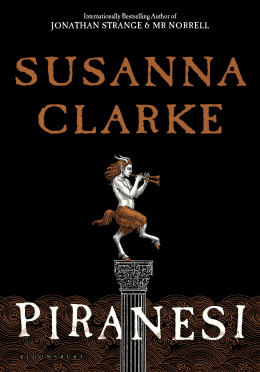
In getting ready to write this review, I did some quick research on Piranesi‘s author and discovered, to my astonishment, that, unless you count a compilation of short stories, Susanna Clarke has only two full-length novels to her name. Given that Jonathan Strange & Mr Norrell was both fantastic and her debut, and that, as far as I am aware, she had never written an unpublished, full-length novel prior to it, the woman must be incredibly talented.
But this review is about Piranesi. And Piranesi is not Jonathan Strange & Mr Norrell, both to its detriment… and its benefit.
Overview of Piranesi
What is It?
Piranesi’s house is no ordinary building: its rooms are infinite, its corridors endless, its walls lined with thousands upon thousands of statues. Within the labyrinth of halls an ocean is imprisoned; and waves thunder up staircases, while rooms are flooded in an instant. But Piranesi is not afraid; he understands the tides as he understands the pattern of the labyrinth itself. He lives to explore the house.
There is one other person in the house—a man called The Other, who visits Piranesi twice a week and asks for help with research into A Great and Secret Knowledge. But as Piranesi explores, evidence emerges of another person, and a terrible truth begins to unravel, revealing a world beyond the one Piranesi has always known.
Piranesi is difficult to describe. Yes, it’s a fantasy story, with some magical elements going on, but the magic in this story is in a weird position where simultaneously it doesn’t really matter, and the entire story would be impossible without it—but, in either instance, the protagonist is largely unaware of it. That is to say, narratively speaking, this was an extremely focused, character-driven, slice-of-life-y story that begins and ends at almost arbitrary points, which just so happens to be set in a fictional world. If you find yourself intrigued by Piranesi as a person within the first few pages, odds are you will enjoy the narrative; and, of course, the reverse is true.
That was narratively speaking—as far as setting and world building is concerned, Piranesi is an extremely magical novel, featuring a few wizards, a pocket dimension, and other such things.
Who Wrote It?

Susanna Clarke is the author of Piranesi, which was written sixteen years after her debut novel, Jonathan Strange & Mr Norrell. Before, and after, her debut novel she wrote and published short stories, some of which can be found in her collection The Ladies of Grace Adieu and Other Stories.
The delay between Jonathan Strange & Mr Norrell can be explained by health issues on Susanna Clarke’s part: she developed chronic fatigue syndrome, which appeared to be particularly detrimental to her mental facilities.
Susanna Clarke has also had some of her works adapted for film or radio plays, although I don’t know how much direct involvement she had in those. Jonathan Strange and Mr Norrell (Netflix) appears to have received generally positive reviews.
Content Warnings
Piranesi contains isolated instances of strong swearing (up to, and including, f—).
Beyond that, there’s nothing else that comes to my mind which I imagine the average reader may find objectionable.
The Review
Oddly enough, Piranesi made me think about House of Leaves at multiple moments—but only the parts of House of Leaves that I really liked, so I consider this a positive comparison.
Here’s what I mean by that. Piranesi is primarily set within a seemingly infinite house composed of white marble and filled with marble statues. The house has three levels: the first level is flooded with an active ocean of sorts, the third level has a thin atmosphere and is often filled with clouds, and the second level is stuck between the two. The infinite, bizarre, arbitrary nature of this place often made me think of the mysteriously large interior of the Navidson’s home, although the layout of Piranesi’s world never changed or felt consciously hostile in any way, so comparisons are imperfect between the two.
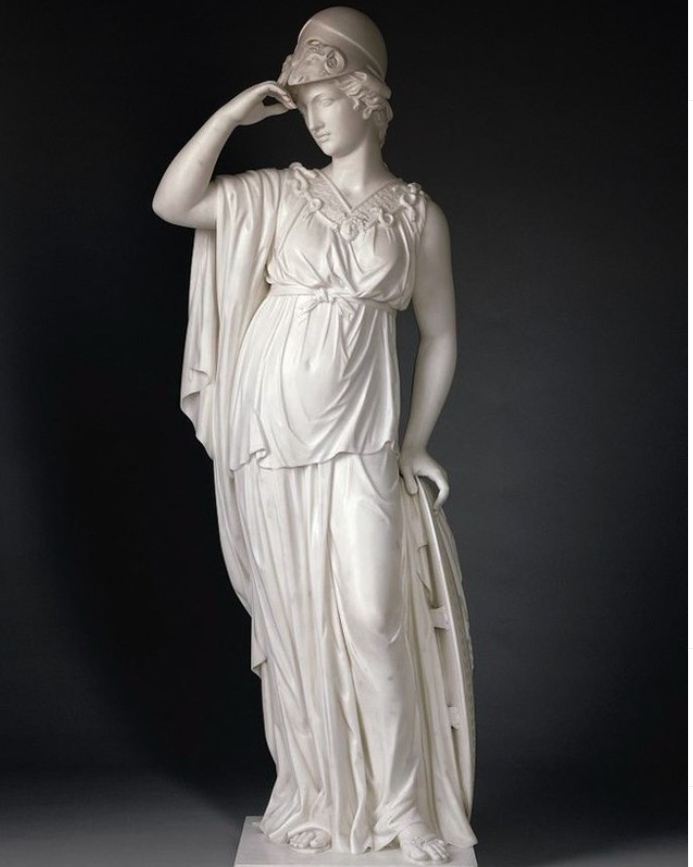
Speaking of Piranesi, he’s the protagonist and the titular (and nearly sole) character. The book is written as a series of journal entries penned by Piranesi, detailing his life within the “House” (or “World,” as he views it) to us. Sometimes we get just his thoughts, or his day-to-day activities, or him trying to puzzle out the mysteries of his strange life; most often some combination of the three.
What’s particularly striking about Piranesi is his innocence and sincerity. The only world he knows is this infinite building, and as far as he is concerned he has always lived there. Rather than being disheartened by being essentially alone in his little world, forced to survive off of rainwater, fish, and seaweed, Piranesi has an intense, religious gratitude for everything that he sees as provided by the house, and is always curious to learn more about it. I found him immediately endearing.
Piranesi does encounter bones of the dead, suggesting former occupants, and he has his favorite statues (which he treats in a manner almost like some Catholics treat saints), but the vast majority of the book is just Piranesi, this vast building, and Piranesi’s journals.
But there is The Other.
Piranesi‘s secondary character is only known as The Other by Piranesi. He’s also the entity that gave Piranesi his name. He’s a scholarly-appearing man who doesn’t treat Piranesi very well, though Piranesi adores him anyway, and he is a central figure in the novel’s slowly-unraveling central mystery. That mystery being, who is Piranesi, really, and why is he here?
And, with that, you know just about everything you can know about Piranesi while avoiding spoilers.
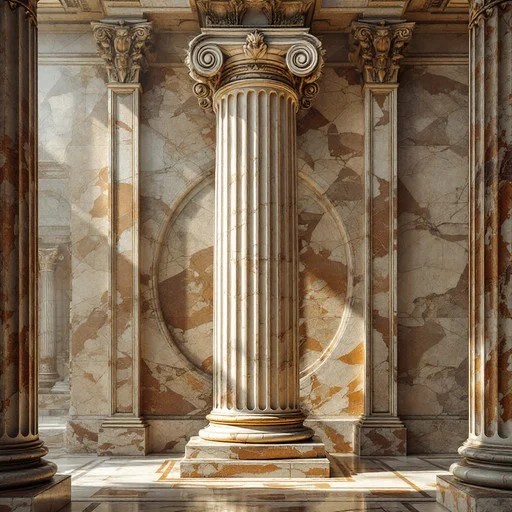
Piranesi‘s central pillar is Piranesi himeself, plain and simple. If you like him, you will like this novel. If you dislike him, I don’t think you’ll find much of value in Piranesi, as the plot is very light, and it somewhat arbitrarily begins and ends. As well, the setting, though I think conceptually interesting, is ultimately very repetitive, as an infinite number of rooms that largely feel the same fail to offer much variety of experience. As well, Piranesi learns very little about what is outside of his limited world.
I liked Piranesi, to be clear. Both the character and the novel. In writing this review, I began to think of the book as oddly comparable to Castaway, the 2000s Tom Hanks movie. Both stories feature an isolated protagonist who carries the story. In both, the protagonist has to survive against “nature,” and loses parts of himself in the process. Both eventually return to their old worlds, but find that where they came from will never be home again—too much has been irretrievably lost.
It makes me wonder if a younger Tom Hanks would have made a good Piranesi.
One thing that works against Piranesi, I think, is the copious praise that it has received. It’s been described as a “nearly perfect” novel, “a modern classic,” and other such grand things that I’m not sure are easily applicable to a novel this consciously restrained in scope and ambition. Yes, Clarke’s execution of Piranesi is excellent, showing either magnificent natural talent or a remarkable honing of her craft, but this novel didn’t uplift, inspire, or move me in a way that I would expect when reading something that some reviewers treat as akin to a modern Lord of the Rings. It’s still deserving of praise, but, to me, not that kind of praise.
Piranesi is like a very humble, but well-built chair made by an excellent carpenter. I’ll appreciate its craftsmanship, and that it’s comfortable, and I might even recommend that my friends go and purchase the same chair—but it’s still a chair. I sit on it, and it brings me comfort for a time, and then it’s time to get on with my day. I’m grateful for that chair, but I also don’t think about it much when I’m not using it, and it’s easily replaced by just about any other chair that meets minimum acceptable standards.
And that’s okay. Piranesi just wants to be an extremely well-done little book, and that’s exactly what it is.
I also think Piranesi‘s existence alongside Jonathan Strange & Mr Norrell doesn’t do it any favors, either. They are extremely different types of books, with very different end-goals, and for me, at least, I generally prefer the ambition and scope of the latter book. I wasn’t able to verify whether this was true or not for the purpose of this review, but I went into Piranesi with the understanding that this novel was set in the Jonathan Strange & Mr Norrell universe; as such, I was initially disappointed by how small Piranesi was, as well as how different it was in terms of tone, themes, structure, and so forth.
I did come to appreciate the book’s smallness and simpleness, though. It’s well-written, and its goal appears to be solely to entertain, so Susanna Clarke has successfully done her job as an author, and the only question remaining is “Who is this book right for?”
Wrapping Up
I think I can comfortably recommend Piranesi to anyone who enjoys almost solely character-driven books with minuscule casts. It’s a small novel, one most people can comfortably read in a long afternoon (or a few days), and it’s a pleasant one.
And then, if you liked Piransei but now want something more ambitious, go check out Jonathan Strange & Mr Norrell.
Enjoyed this review? Consider subscribing below so you never miss an update! You can also follow me on X.
I’m an indie author, and if you enjoyed my writing in this review you may enjoy my novels. The Failed Technomancer is a dark science fiction novel set in a apocalyptic world where robots are eating people; its working title was, and current series name is, called “Robot Cannibal Apocalypse” for reasons that quickly become self-evident. My second novel, Inner Demon, is a fantasy novel with a strong character focus, with a mystery around a missing girl as a prominent narrative feature.

 Boo Ludlow
Leave a comment