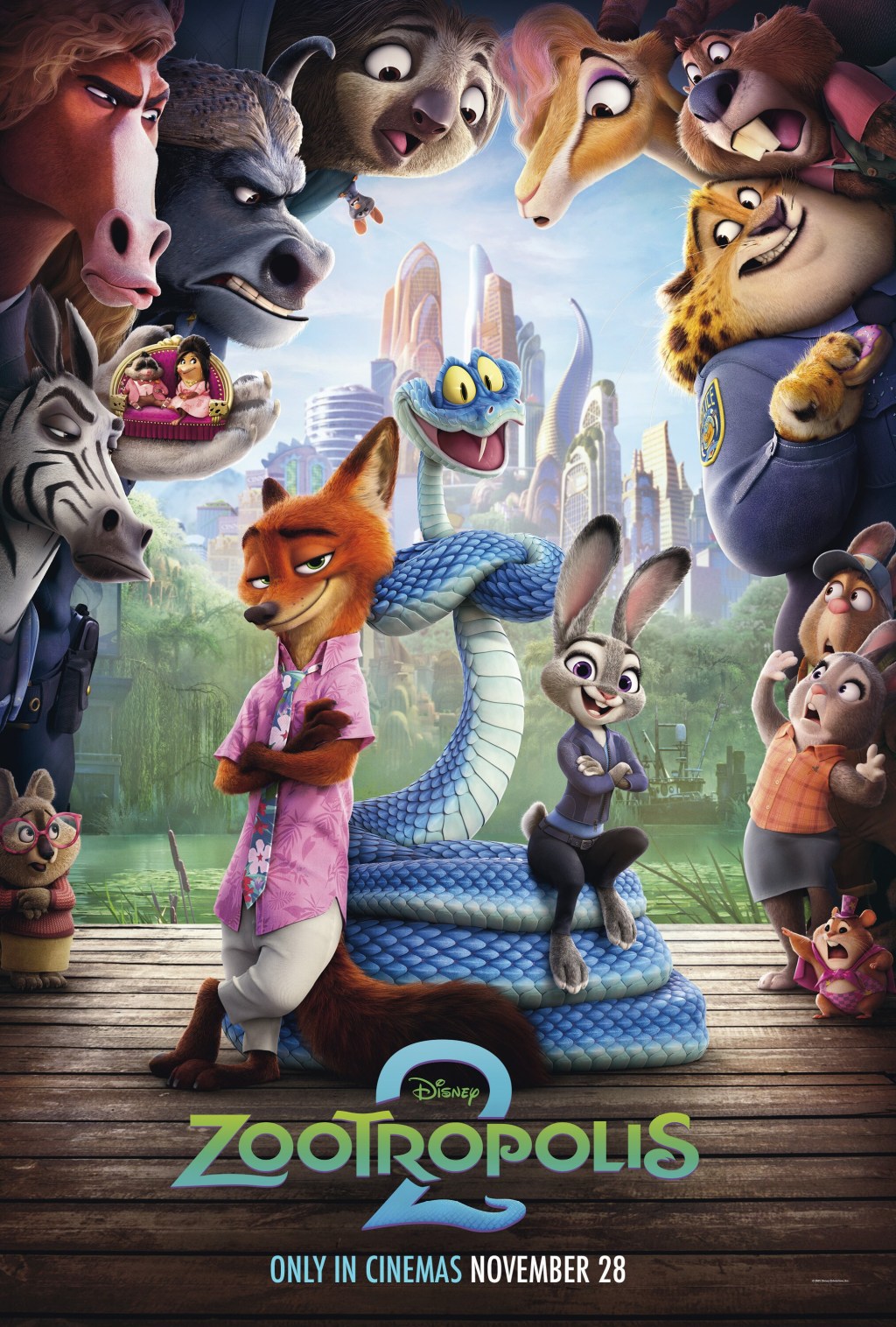
Yeah, yeah, I’m really late to the party. Part of that is because this movie is yet another in a long line of Disney releases that, once out in the wild for more than a few minutes, totally disappeared. No conversation, no hype, no lasting impact, nothing. Not a good sign.
Let’s start looking at this turd.
Zootopia 2 Sucks
As soon as we finished watching Zootopia 2, I turned to my wife and said, “If that script wasn’t written by AI, it sure felt like it.”
Well, according to IMDB, it wasn’t. Its sole credited writer is a guy named Jared Bush, who also worked on Encanto and the first Zootopia. I have no idea what happened—those were both really entertaining movies. Either this guy wasn’t given the resources he needed to write a good script, or he wasn’t a part of the real magic behind those other two films. Either way, being credited for Zootopia 2 is a black mark.

And that’s a bummer, because Zootopia 2‘s predecessor was amazing.
Zootopia brimmed with a lot of the magic that Disney once put out consistently, and is still trying to associate with its brand. It has an inventive world, great music and voice acting, expressive animation—and it even managed to be a pretty bald allegory for racism without being preachy or divisive.1 It’s not everyone’s favorite movie, but I’m not aware of anyone who dislikes it.
Inarguably, I think, the heart and soul of that movie was Judy Hopps and Nick Wilde.
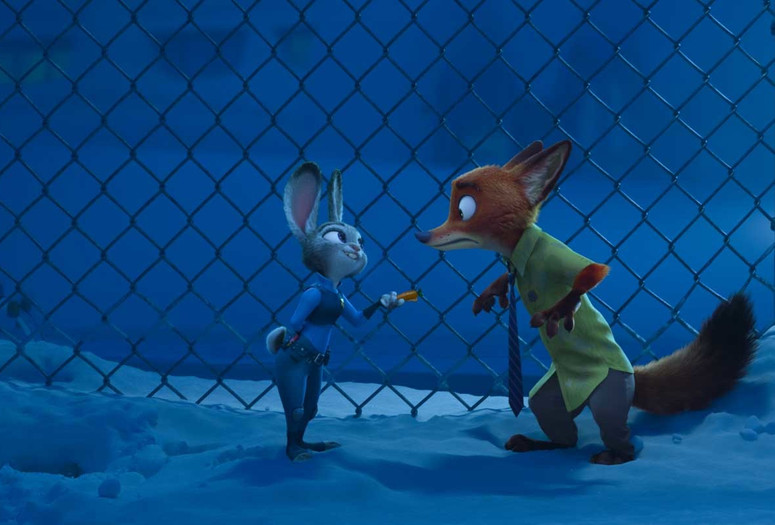
These two characters were a joy to watch—complementary opposites in almost every way. When one character wanted to go right, the other went left. When one character was angry, the other was laughing, or smug. When one character had a good idea, the other was probably going to mess it up in some way.
And those two opposing forces gave Nick and Judy lift! The moments where they finally figured out how to move in sync were impactful.2 It made the final defeat of Bellwether, which required Judy and Nick to be acting in total trust toward each other, relying on each’s unique traits and strengths, extremely satisfying (despite being just a little bit convenient).
But the Nick and Judy of Zootopia 2?
Yeah…
Bear with me here. There’s a Stephen King quote about the various types of fear; here’s part of his thoughts on “terror”:
Terror. When you come home and notice everything you own has been taken away and replaced by an exact substitute.
Speaking as someone with an extremely literal brain, I don’t agree with that exact quote if applied exactly as stated—but what I imagine King actually meant is that the substitutes aren’t perfectly exact. They are sufficient to completely fool someone not intimately familiar with them, but there’s still something off, something that maybe only you would recognize (even if only because of a feeling), something that clues you in to the horrible wrongness of the situation.
It’s like getting the horrible, creeping sensation that the thing walking around your house isn’t really your mother. It’s wearing her clothes, it’s wearing her skin, it’s using her voice, it’s… almost using her mannerisms. None of your friends can tell the difference and maybe, worse, your father or siblings can’t—but you can.
You know.
Well, that’s more or less what happened to Nick and Judy. Minus the horror.
I’m being serious. Zootopia 2 isn’t a scary movie in any way, but I can’t think of a better way to describe Nick and Judy than with the above example of terror. They’ve been replaced—they aren’t the same characters that they were in the first movie, but something else that’s taken their form.4
That sense of offness was my first sign that this movie had no soul. And the experience was all downhill from there.
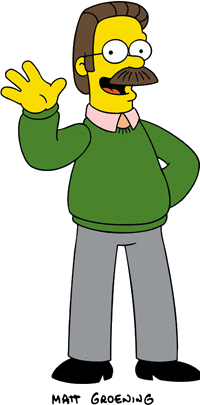
Judy’s problem can be mostly summarized in one word: flanderization.5 Yes, she was driven, and sometimes myopic, in Zootopia; couple those traits with naïveté, and she made some rash decisions, but she wasn’t a fool, or cruel. There were times when she slowed down, when she rethought her plans, when she prioritized Nick—she was a force to be reckoned with, but she wasn’t pretending to be an unstoppable force with no immoveable object in the way.
In Zootopia 2, Judy is nothing but blind drive, to the point of her being essentially suicidal in one chase scene. She doesn’t just bend the rules, but she fully breaks them while ignoring the input, or safety, of those around her—usually Nick. She comes across as a massive, self-centered jerk, which wasn’t the case before.
That’s to say nothing of her lunatic leaps in logic that felt out of character. When you encounter a snake who was just engaged in clandestine activities, who appears to be trying to destroy something very valuable, and you instantly, fully commit to his cause just because he said, “I can’t explain now, but I have a good reason for this!”… you’re a fool. And Judy Hopps wasn’t a fool. Before, anyway.
The fact that the narrative justifies her horrendous leaps in logic doesn’t make them any better.
Nick’s problem is that he’s been entirely neutered. In Zootopia, he had a personality, goals, thoughts—a spine. He pushed back against Judy, got his own way when it mattered. He felt like an equal. In Zootopia 2, he spends the entire movie oddly unwilling to provide any resistance to Judy, verbal or otherwise, accepting all sorts of abuse without even a hint of clever resistance. What happened to his inner rebel?
If there were canonical years of Nick being stuck as a permanent partner to this twisted Judy, perhaps I’d be willing to believe that Nick had been hen-pecked into his current sad state, but in-movie it appears to have only been a few months since the events of Zootopia. So what’s wrong with Nick?
Worse, Zootopia 2 seems to hate Nick for just existing. In almost every other scene, Nick is the butt of some gross, or painful, physical comedy, or gets mocked or threatened, while Judy remains unscathed. Nick frequently brings up good ideas that should be at least considered, but get rejected out of hand (paw?) by Judy. This is coupled with Judy being a permanent ass6 and getting narratively rewarded for it. It doesn’t matter how thoughtless or impulsive she is, she still ends up with exactly what she wants in nearly every scene, or better, with any obstacles in her way serving as little more than speed bumps.
Ultimately, Nick is just dragged along in a humiliation ritual, serving little to no narrative purpose for most of the movie, while Judy keeps metaphorically stepping in crap and somehow pulling her foot out cleaner and shinier than before.
What’s more, the relationship between Nick and Judy is… bizarre. Their “partnership” feels like it was written by an internet oddball who wanted to make Nick and Judy a couple after the first movie, but then a later draft had the romantic elements scrubbed out—but the empty motions remain. To be clear, there was never any romantic interest between these two characters.
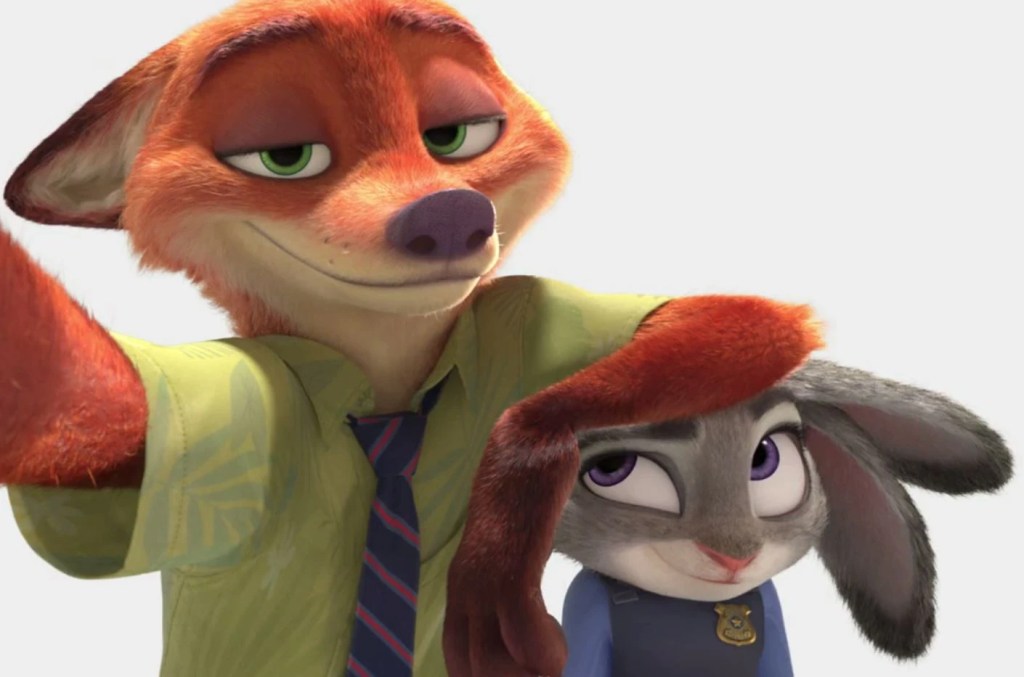
They had a playful, teasing sort of relationship in Zootopia, but I can’t emphasize enough how platonic it was. Anyone that insisted there was any romance between these two characters was projecting. At most, they are like a brother and sister.
The end result is one of the worst sins a sequel can commit: making the first movie retroactively worse. I liked how Zootopia ended with Nick becoming a cop, but Zootopia 2 made me realize how terrible of an idea that actually was. Nick doesn’t fit at all. He’d be far better off as some sort of criminal expert consultant.
Zootopia 2 also made me question whether or not it was possible for Nick and Judy to gel outside of life-threatening circumstances, making their bond forged in the first movie feel… temporary. Or situational.
Conditional.
I’m going to break away from the protagonists now. One of the themes of Zootopia was the inaccuracy of stereotypes—yeah, the movie made jokes about different animals being certain ways because they were that type of animal, but this message was transcended by examples of how not all bunnies were limited by their size, not all foxes were crooks, most predators weren’t mindlessly homicidal, etc. Many (but not all) stereotypes exist for a reason, but individuals should be treated as individuals. Zootopia 2 throws this away and has an animal stereotype joke every minute or so (it felt like), which came across as really insincere to what Zootopia was about.
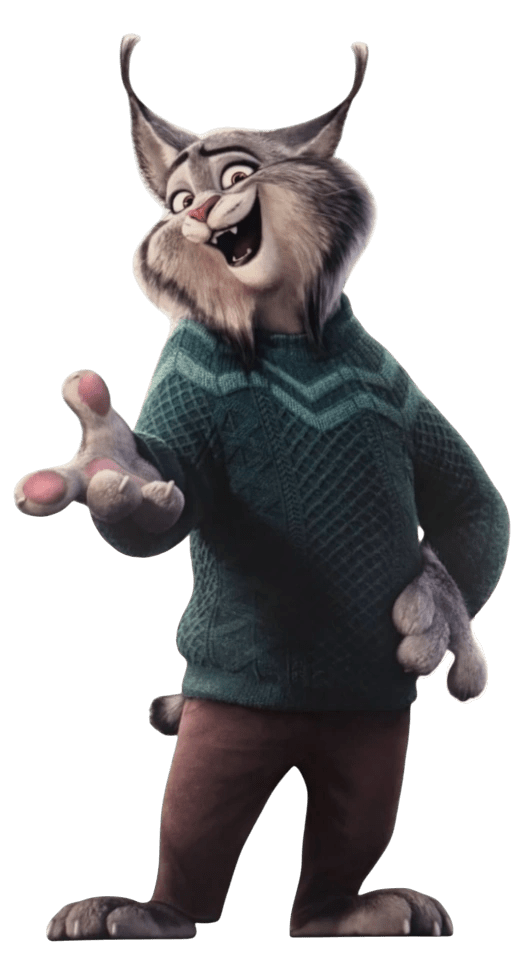
I also hated this lynx with every fiber of my being. Pawbert, I think his name was?
Aside from coming from a boringly unapologetically villainous family, the moment this guy met Judy I knew he was the bad guy. My wife wasn’t convinced, and maybe half the movie was spent trying to convince us that she was right—and it almost worked. I almost was persuaded that Zootopia 2 was going to do the slightly more interesting thing by having Pawbert not be the obvious “twist” villain, but no. He was undercover the entire time, acting on an incredibly stupid villain plan that put his entire family in danger in a very high risk, low reward sort of situation, with the end goal of… impressing them?
It would be a waste of words to discuss everything that comes to mind, so I’ll finish with this tootsie roll–wrapped turd: this movie is filled with cringe-inducing therapy talk. There’s a literal therapy scene, there’s snippets therapy discourse all over the place, but the most egregious moment is when Nick and Judy “make up” near the end. Nick spent the entire movie being bashed over the head for reasonably questioning the situation—and not wanting to get murdered and dumped in a gutter—but for some reason he’s apologizing to Judy, as well as speaking about his emotional past like he has a psychology degree bestowed upon him by a blue-haired professor. Judy is just as bad; not a single moment of the narrative has done anything but justify her objectively thoughtless or impulsive actions in this movie, and at no moment does she have some self-reflection about her faults, but for some reason, in this moment, she’s gushing about hidden trauma or whatever, and all she does it talk about herself instead of addressing the person she’s been mistreating the whole film.7
I’ll grant that last scene one bit of grace: I couldn’t finish it. Halfway through Nick and Judy’s therapy talk is when I turned the movie off. It was just too painful, and finishing the movie at that point because there wasn’t much time left would have just been giving in to a sunk cost fallacy.
… But It’s Kinda Funny
Unfortunately, Zootopia 2 is not a fun bad movie—not like I’ve been told The Room is. I highly doubt that, in years to come, excited fans will set up movie nights to watch Zootopia 2 specifically to enjoy of it’s unique brand of awful.
My apologies for the above, misleading clip.
But I still found myself laughing at some of the tremendously stupid moments in this film. An odd amount of them are directly related to one awful character, a character who feels like she desperately wanted to be a main character in this movie, but the writers couldn’t manage to justify swapping her with Nick. I’ll limit my focus to this one character.
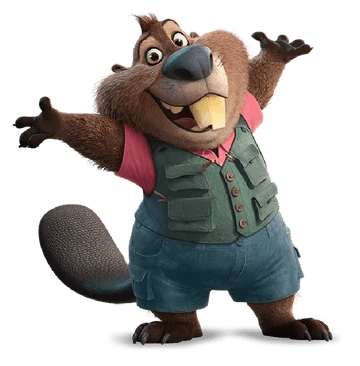
Meet Nibbles Maplestick, a conspiracy podcaster beaver who, like Judy, just kinda succeeds at anything she does, but without the baggage of being as much of a jerk as Judy is. She just happens to be holding answers to a lot of the questions that Judy and Nick have and she magically shows up out of nowhere several times to resolve an obstacle and get the plot moving again. She’s so special!
She’s also a lesbian! For some reason. Is that supposed to be a joke, Disney? A lesbian beaver? Who is, presumably, into other beavers? Is this supposed to be one of those jokes that only adults are intended to recognize and laugh at?8 If so… Well, I’m cheating by putting this tangent in this section, because I didn’t laugh.
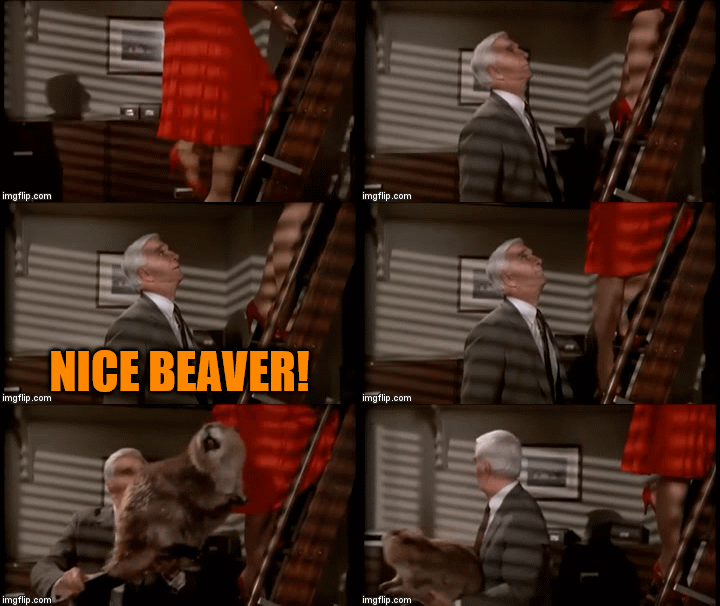
I bring this up but it was a mild internet kerfuffle at the time Zootopia 2 came out. I think discussions of abnormal sexuality doesn’t belong in a children’s film; regardless, and perhaps more relevant, from the parts of Zootopia 2 that I saw I would have never guessed that this beaver swam upstream. Maybe the ending makes that more clear—I did quit roughly at Nick and Judy’s weird impromptu therapy session, more-or-less at the movie’s tepid climax. Assuming the movie never makes it obvious, you’d only know Nibbles’ sexuality from elements external to the movie, or maybe you’d guess that after learning that the beaver’s voice actor is a lesbian—making it a pretty weak adults-only joke, if that’s what it was.
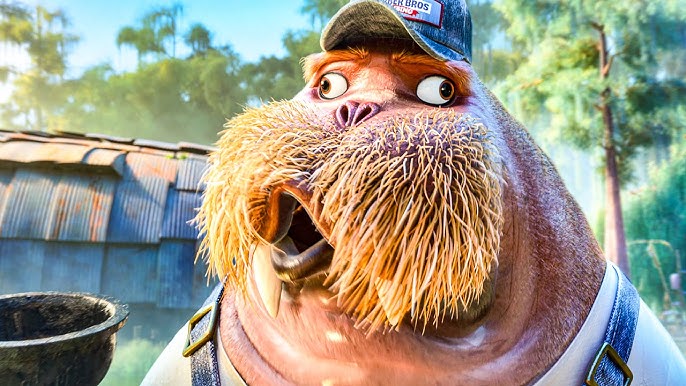
The other intentional(?) jokes that Nibbles features in are only funny if you’re really tired. Her making fart noises and saying “bub” repeatedly with this walrus wasn’t a good joke, but it did make me laugh at just how dumb the whole situation was. This is modern humor?
Anyway, carrying on. Despite not knowing Nick and Judy at all, Nibbles is for some reason is aware of, and deeply invested in, their “partnership.” There’s a scene where Nick gets arrested and Nibbles happens to be locked up in the cell facing his. For some reason she decides to start grilling Nick about his “partnership” with Judy, and for some reason he answers her and starts baring his soul. And then Nick, the professional con artist, is completely incapable of using his claws to pick his cell’s lock and escape, despite his best efforts, but for some reason Nibbles is able to chew a broomstick into a key and pick the lock—first try, too. Just another moment of the movie punching down at Nick, which you either have to laugh at or get mad about, and getting mad sometimes gives me a headache.
Nibbles is also central in the moment that most blatantly shows just how little the writers cared about this movie. Pawbert has finally revealed his true stripes and is attempting to kill Nick and Judy; he has a little stabby device filled with snake venom, with two prongs so it looks like a snake bite. He stabs Judy, and he stabs Nibbles. We watch Judy as the poison ever-so-slowly works its way through her system, dramatically killing her—but then, at the last possible moment, she’s stabbed with an anti-venom pen. Judy is saved.
But it took all of the anti-venom to save Judy. So far as we, the audience, know, Nibbles is doomed. Wah.
Then, all of five minutes later, Nibbles walks on-screen, right as rain. When asked what happened, her response is, essentially, “Oh, I walked it off.” And I could hear in my head the scriptwriter sighing in relief as he somehow lowered his standards once again just to get this draft out the door.
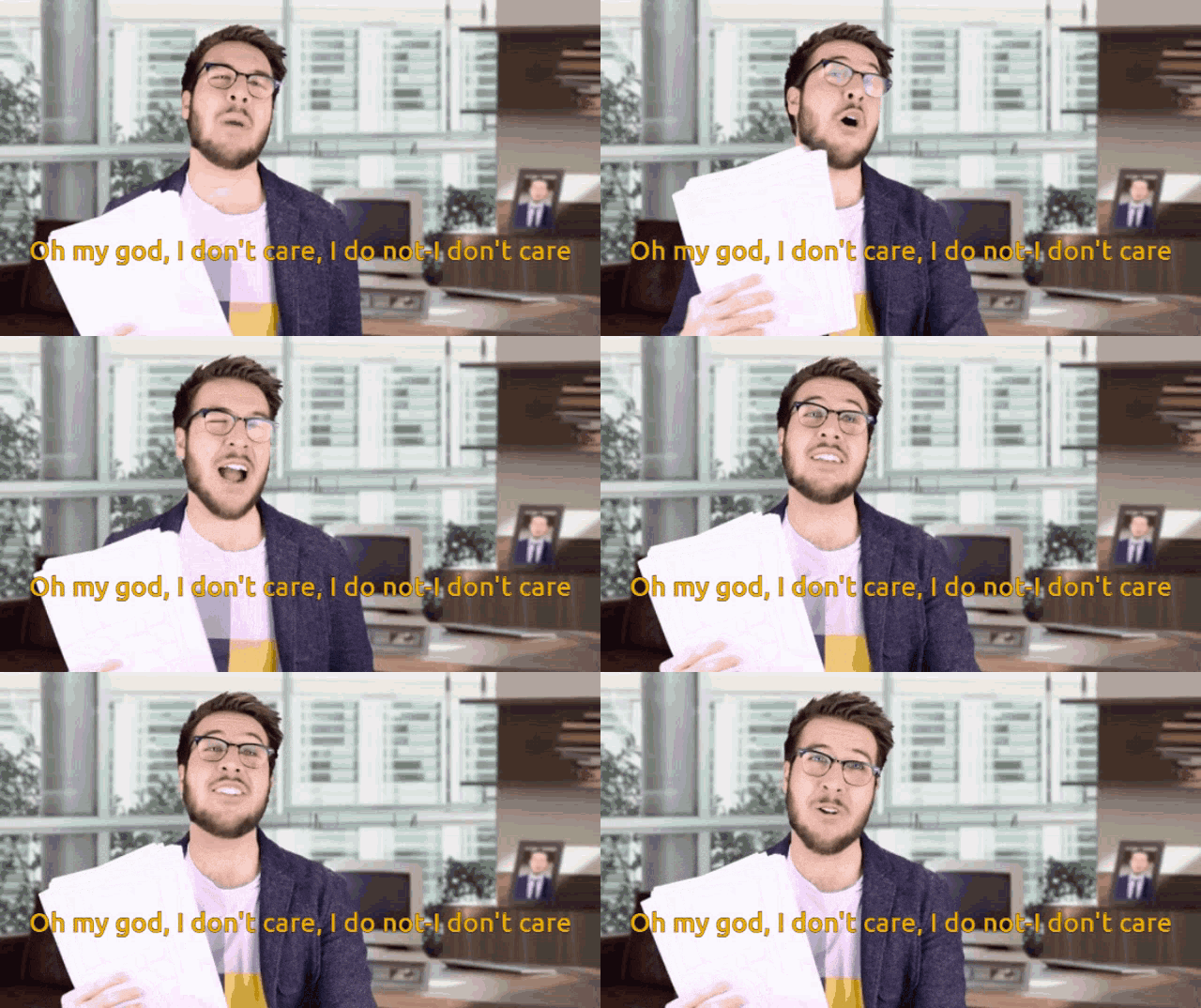
A still lame, but far better, response might have been something like, “Oh, he stabbed me in my overalls. These are pretty thick, so I barely got scratched. Still made me feel a little ill—hence why I was taken out for a little bit—but it wasn’t a lethal dosage.” Then have her limp around to sell the moment. That would be a passable. But, instead, our lovely writer went with the explanation of, “I didn’t want to deal with it, so she’s fine.”
It was so unbelievably stupid that I couldn’t help myself—I laughed hard enough that I nearly woke up my kids.
This is what Disney is willing to throw $250 million at?
Wrapping Up
Unfortunately, quality never has a direct correlation with box office success. Zootopia 2 broke a billion dollars at the worldwide box office and smashed one or two records in the process. I don’t think that Disney cares that the movie was immediately forgotten by most people immediately afterwards; said people had burned their cash, and the Disney execs probably laughed all the way to the bank. I just hope that the inevitable Zootopia 3 has some actual effort and passion put into it, at least as far as the script is concerned.
Or I can hope that Zootopia 3 has far better competition when it comes out, so people don’t choose to turn their brains off and watch it, having nothing better to go and see. I don’t know for certain if that’s what explains Zootopia 2‘s success, but it’s my headcanon.
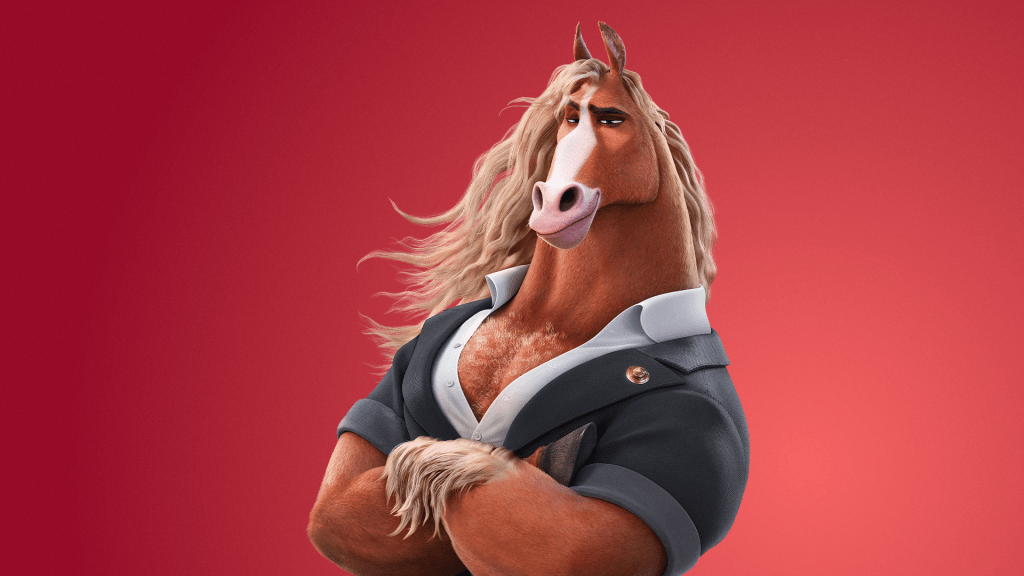
This guy was the best part of the film, by the way. Mayor Brian Winddancer. He was a one-dimensional stooge in service of equally insubstantial villains, and him having hooves instead of hands makes me wonder how he lives his life in a bipedal world—but he was voiced by Patrick Warburton. So, you know, in the context of quality of the rest of the movie that makes him A+ material, a Grade A horse.
I guess I’m an easy guy to please, in that regard.
Enjoyed this article? Consider subscribing below so you never miss an update! You can also follow me on X.
I’m an indie author with two books out so far: The Failed Technomancer and Inner Demon. Consider checking them out!
- It showed how people of wildly different backgrounds can come together and be united only through shared culture and values, and how racial/ethnic/whatever tension can be artificially stoked by people who have something to gain from conflict—it’s remarkable that Disney allowed a movie with such messages to be made. ↩︎
- It also led to a bunch of weirdos on the internet romantically pairing these two characters, despite there being no romantic inclinations between the two whatsoever—but that’s reflective of the internet not understanding that multiple types of love and affection exist. It’s not a knock on Zootopia. ↩︎
- Hopefully this quote isn’t apocryphal, since I couldn’t find a more authoritative source. I first remember hearing this quote in a Vsauce video about creepiness. He quoted Goodreads. Not sure they count as authoritative either. ↩︎
- In the hands of a different screenwriter, that might have turned into a really cool twist at the end that this movei: Nick and Judy were never the same characters as in Zootopia, but rather a skinsuit, costume, or robot of sorts being puppetted by vengeful snakes—but now I’m dreaming. Disney would never do something like that in their cute, PG animal movie. ↩︎
- “The act of taking a single (often minor) action or trait of a character within a work and exaggerating it more and more over time until it completely consumes the character. Most always, the trait/action becomes completely outlandish, and it becomes their defining characteristic, turning them into a caricature of their former selves.” thanks, TV Tropes! ↩︎
- And I’m not referring to the biblical term for donkeys. ↩︎
- There’s a prior scene where Nick and Judy are climbing a cliff. Nick timidly airs his concerns, Judy brushes him off, Nick teases her with the carrot recorder—which is extremely precious to him—Judy tries to take it, and in the ensuing fight it falls to the ground and gets destroyed, and, for some reason, Nick ends up apologizing to Judy. It wasn’t as bad as the therapy moment, but I thought mention of it belonged in the footnotes, at least. It’s a similar kind of bad to this scene. ↩︎
- The king of these sorts of jokes, for me, is How to Train Your Dragon‘s line, “It’s half of your mother’s breastplate. She would have wanted you to have it.” ↩︎


Leave a Reply