
Everyone says, “Well, you should be harmless, virtuous, you shouldn’t do anyone any harm, you should sheath your competitive instinct. You shouldn’t try to win. You don’t want to be too aggressive. You don’t want to be too assertive.”
No. Wrong. You should be a monster, an absolute monster, and then you should learn how to control it.
It’s better to be a warrior in a garden than a gardener in a war.~Jordan B Peterson
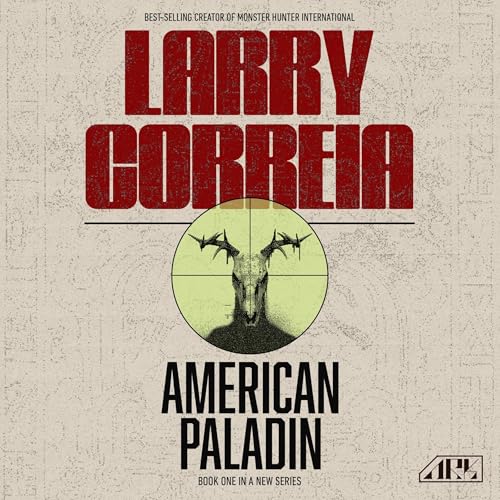
I don’t know off the top of my head whether or not Larry Correia and Jordan B Peterson have ever met, nor whether they have any particular thoughts about each other, but I have to imagine that they would get along well enough. If nothing else, this JBP quote pairs really well with what I got out of American Paladin.
Wishing JBP a quick recovery. Poor guy is on another round of major health issues.
Anyway, back to the actual focus of this post—American Paladin is Larry Correia’s first novel published through Ark Press. It’s a Larry Correia story—if you’ve read Monster Hunter International, or The Grimnoire Chronicles, or most of his other work,1 then you probably already know whether or not you’ll love or hate this one. As for me, I enjoyed American Paladin; it feels a lot like another flavor of Monster Hunter International, cooked by a chef who has gained almost two decades of experience since his excellent debut.
And I want to talk about it.
Addition: Before I finished this blog post… my wife gave birth! As such, I’m finishing it during some spare moments where she and the baby are asleep, someone has been kind enough to take the others kids (or the kids are taking naps), and I’m awake enough that I’d rather not sleep (despite the headache). So, unless the transition into being outnumbered by my own children is smoother than I expect it to be, and unless my work on Halfwhisker progresses far faster than it has been, you probably won’t hear from me for a while.
Overview of American Paladin
What is It?
Mike Spears is a drifter, a vigilante, an expert in taking down the evil in our world one monstrous incursion at a time. He’s anonymous and low profile because he needs to be: a man with a name only whispered in legend and only spoken aloud in desperate straits.
Welcome to the dark places of the modern American West—a west where mythic worlds roam the landscape like so many weather fronts. And when those fronts collide, horror often spills out. Blood-soaked ground. Vanished neighbors. Towns gutted by monstrous horrors no one dares name. The so-called authorities won’t touch this stuff. Most won’t even admit it’s real.
But when the last shred of hope is nearly spent, there’s one man who will step into that darkness—and deal with it.
Now a true-crime podcaster is closing in on the truth about Spears and the strange world he navigates. Too close. She’s drawn something demonic through the door between worlds—a kill team from another deeply twisted reality. And, if Spears is right, these techno-Aztec operators are the poison tip of an interdimensional empire that has long bathed our land in blood.
But first they’ll have to get past Mike Spears.
American Paladin is an urban fantasy novel (and modern fantasy western) featuring a highly competent protagonist, disgustingly evil antagonists, monsters and magic from uniquely American myths and legends, a lot of guns and violence, and a long chase across the modern American West. It shares a lot of DNA with Monster Hunter International—strange worlds overlapping with ours, often resulting in horrid monsters crossing over, and dangerous, well-armed men looking to take care of the critters.
However, where MHI is a bit of a kitchen sink as far as world-building is concerned, American Paladin is laser-focused on American myths and legends,2 some taken directly from folktales and others creatively adapted by Correia himself.
Who Wrote It?
Raised on a dairy farm in El Nido, California, Larry Correia learned early that hard work, guns, and books all had their place in a well-rounded life. A childhood spent hoisting hay bales, reading everything he could get his hands on, and blasting varmints turned into a life marked by grit and storytelling.
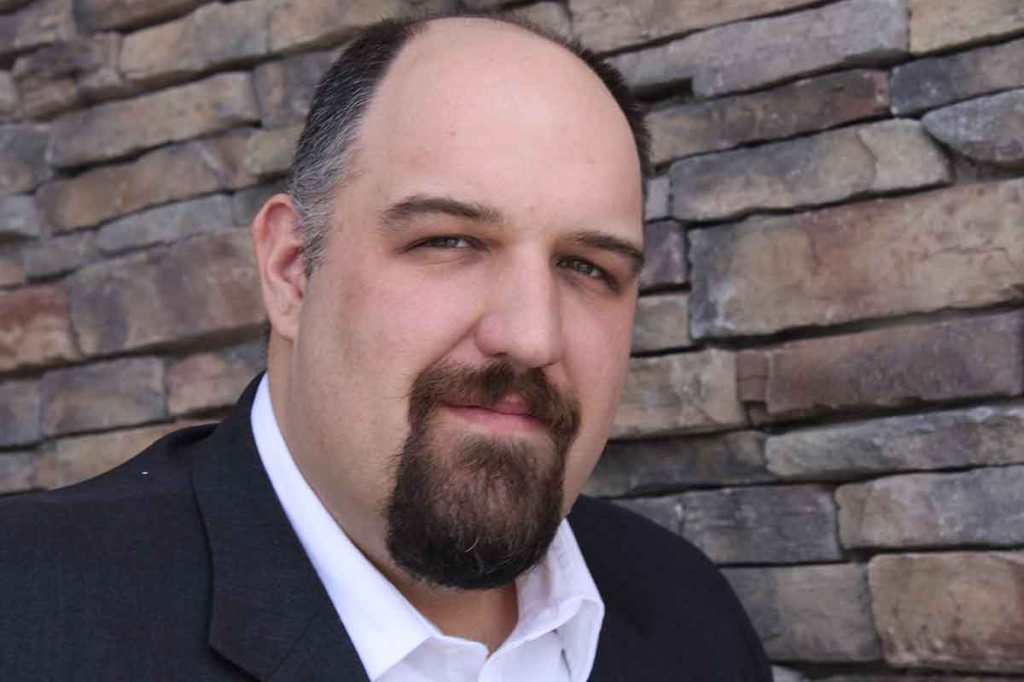
[Correia has] been a farmhand, warehouse grunt, accountant, firearms instructor, and gun-shop owner before turning to full-time writing.
Correia’s stories reflect that same ethos—tough men, hard choices, and no room for flinching. His breakout novel, Monster Hunter International, launched an internationally best-selling series. His fiction blends folklore, firepower, and blue-collar realism with a tough of humor into fast-paced tales in which tough men stand their ground against overwhelming odds. American Paladin is the first entry in a new series.
Correia lives in Utah with his family.
Larry Correia also has an author website and is very outspoken on X.
Content Warnings
This is a Larry Correia novel. Expect plenty of harsh language (lots of “f—”) and a ton of violence, with descriptions along the lines of “but he probably wasn’t going to move any time soon, given that his jaw had been blown into his skull, turning his brain into soup.” (That’s a paraphrase—Correia’s actual prose is a bit more poetic than that.)
That said, if there’s one thing you’ll never find in a Correia novel, it’s explicit sexual content, and American Paladin is no exception.
Prior Reviewed Books
We like Larry Correia and his novels around here. I’ve reviewed enough of his stuff that I don’t plan on putting every link below—there would be too many of them! Plus, most of my Correia reviews came out before I formalized how I wanted to organize and present reviews, so I don’t consider them up to current standards. Use the search bar in my blog if you really want to find everything I have to say, but the long story short is that I like Correia’s body of works.
American Paladin: Dust Sacrifice: An appetizer to get you ready for the real meal, American Paladin. Dust Sacrifice is an example of the sorts of tiny missions that Mike Spears gets into when he isn’t actively fighting the Kultec empire and the supernatural decides to rear its ugly head.
Saga of the Forgotten Warrior: Epic fantasy written by an author who knows how to keep things lean and mean, Saga of the Forgotten Warrior doesn’t have a single wasted word in it despite having a massive scope and lots of intrigue. Expect heroism, sacrifice, the struggle between duty and morality, and interesting magic, all in a six-book completed series that really nails its conclusion.
The Grimnoir Chronicles: Hardboiled detective alternative history with a dash of magic that feels somewhat Sandersonian, ad a completed trilogy, The Grimnoir Chronicles is an excellent adventure with some good mystery in it, as well as uniquely lovable characters. if I had one complaint, it’s that the ending is a little sudden.
Monster Hunter International: The series that started everything off, that is not yet finished at the time of writing this post, MHI is an urban fantasy series that follows Owen, a “chosen one” who joins the titular organization and has to battle through an escalating series of dangers to keep the world, and his family, protected from the forces of evil. (And to get paid in the meantime, of course.)
As a side note, I haven’t read one of Correia’s latest outings, Academy of Outcasts—but I’d like to. The issue is that Correia and/or Aethon Books are selling it exclusively on Amazon with full DRM. Maybe someday I’ll be persuaded to get the physical copies, but buying physical books is significantly more expensive than ebook,3 making it a much harder entry point for a series I haven’t given a taste test yet.
If, somehow, you ever read this, Mr. Correia, or Aethon books—DRM is bad! Amazon exclusivity sucks!
(Who am I kidding, they are probably bringing in enough money that they couldn’t care less what anyone like me has to say. They have their audience, and their audience is married to Kindle Unlimited.)
The General Review
I have one complaint about American Paladin, and it’s entirely an issue of personal taste: I really don’t like it when I read an extremely engaging scene to kick off a story, and then that scene is immediately followed by An Amount of Time Earlier… and suddenly we’re in a far less interesting scene, knowing it’s probably going to be a while before we get to the good stuff.
I’m bringing this criticism up early because that’s almost exactly how American Paladin starts off, with a prologue introducing the readers to some Kultec hunters and their skinchanger leader—and the scene is excellent. There’s a powerful current of danger and menace that suffuses everything, the book’s primary antagonists are established to be very threatening, some of their resources are revealed, and you learn the minimum you need to learn to understand why they are here and what they want. The scene gave me the impression that American Paladin was kicking off high-octane and wouldn’t slow down for a while.
And that’s just not what happened. For the better, ultimately. But still.
I said almost exactly earlier because, well, here’s the thing: American Paladin‘s opening paragraph (for its first chapter) has a pretty great hook. I think it could have stood on its own just fine:
Mike Spears swore when he saw the red and blue flashing lights appear in his rearview mirror. Nobody likes getting pulled over for speeding, but that feeling’s a whole lot worse when there’s a dead pedophile in the back of your truck.
That’s a pretty strong opening, right? I immediately wanted to know why Mr. Spears had a dead pedophile in the back of his truck—and this scene (involving Spears talking his way out of getting arrested) is followed by Spears confronting human traffickers and killing them, showcasing Spears’ code and methods in a practical environment while also making me very curious what the real adventure was going to be after I finished this appetizer. In short, it was another really solid chapter, but not one that I thought sat frictionlessly with what came before.
I have a few other complaints about the opening prologue, too—for example, while the information cryptically shared got me very curious, it also created flat moments in two or three other scenes where the narrative read to me like a certain piece of information was meant to be a big reveal or surprise, but I knew it already. I still enjoyed those scenes and wanted to keep reading, but, again, there was some unnecessary friction there.
This is a long way of saying that I don’t think American Paladin starts off on its best food, despite starting off on a strong foot. Correia is an excellent author with a proven record, so I’m sure he had his reasons for this opener—it just didn’t happen to work for me.
But the good news is that the book catches its stride quickly, and it’s all uphill from here. As far as pacing is concerned, that’s almost literal—things start out a little on the slower side as Spears finishes up his pedophile hunting and starts to wonder what he’s going to do next, then gradually picks up as he learns about a podcaster who is getting a little too close to the truth about him and decides to give her a peaceful visit4—and then ends up dealing with the almost literal hell on earth that’s hunting for her. Though there are important, slower moments to give the reader (and Spears) a breather before the next monster shows up, by the end of the novel the engine has been revved to max, nitro is at dangerous levels, and you’re just holding on for dear life.
The general structure of American Paladin is very classic and American, that of the lone cowboy who enters a town, encounters an innocent in need of protection, and faces down ever-intensifying evil until it’s all been put six feet under—but that’s a good thing, because it’s story structure that Correia handles very well. Spears’ competence, moral complexities, and realistic weaknesses create a character for which there’s always something interesting to learn about or see him do, and he pairs extremely well with the novel’s secondary protagonist, the aforementioned podcaster, Kate, who is a fish out of water in a world of hidden evil and danger. Spear’s quick transition from stalking and observing Kate to being willing to die for her says wonders about his moral character, and creates a lot of beautiful moments where Kate realizes that she really doesn’t deserve the grace she has been given (despite her horrible situation being anything but her fault), and just being grateful that men like Spears exist—even if his methods make her very uncomfortable, at least initially.
And as for the guns and violence? The monsters and mayhem? The fighting and flighting?… C’mon. It’s a Correia novel. There’s a lot of it, he’s clearly passionate about it, and they are some of the best parts of the book. I wouldn’t say that this is Correia’s absolute best violence in his novels, but it is some of the most emotionally grounded violence—meaning, I felt more concerned about Spears and Kate than I have many other a Correia character. This is probably helped by the fact that they felt much more fragile than I’m accustomed to expecting in his novels.
I also have to say that I am extremely interested in the world that American Paladin promises to slowly reveal. To avoid too many spoilers I won’t say too much, but the Kultec are terrifying, oppressively evil, and alarmingly organized villains that just demand to be confronted by the forces of righteousness, which present a very different sort of primary source of villainy than I remember reading of in any other Correia novel.
To try and summarize, reading American Paladin could easily be compared to eating a double bacon cheeseburger with all the fixings—classic, unapologetically American, satisfying, and I don’t see myself ever getting sick of it. And I’m only selfishly disappointed that the chef can’t cook as fast as I can eat.
What’s American Paladin About?
A wise man once told me that the main reason evil men prosper is because decent folks don’t want to serve time.
I suppose some of us are just less decent than others.
American Paladin
The above line hit me harder than I think anything else Larry Correia has ever written; it also serves as the thematic backbone of American Paladin. Out of context, perhaps a quote like this could be interpreted as a blanket justification for well-intentioned vigilanteism, but in-context this quote means so much more—and all of that meaning is embodied in a man named Mike Spears.
Mike Spears is a man with a very particular set of skills, acquired over a lifetime of nearly mindlessly seeking vengeance for his murdered family—and those skills make him a nightmare for the forces of evil. He is very good at finding people, and he is very, very good at killing them.
Spears could very easily have end up as a Punisher sort of character, based on that description alone, but he’s elevated by a moral code that has protected him from ever bringing harm to an innocent (so far as he is aware). He doesn’t take action until he’s totally confirmed that his target is guilty of evil—but once he knows your sins, nothing will stop your comeuppance.
Finally, Mike Spears isn’t in it for the money—most of the time, he won’t even accept it if you try to pay him after the fact.5 He also isn’t in it for the glory, given that he does everything he can to not get named (the Paladin moniker is described as a necessary evil, one that Spears originally adopted as a half-serious joke). Everything Spears does, he does because it’s right, because he’s capable, and because no one else is taking care of that problem.
In short, Mike Spears takes responsibility for problems that aren’t his, and he fixes them as permanently as possible—even when that means he’s acting at odds with the way things are “supposed” to be done.
Things go deeper than Mike Spears just being the right guy with the right skills at the right time, of course—these things alone don’t necessarily justify a vigilante. Being the only guy capable of dealing with a problem may, at times, justify taking justice into your own hands—this certainly applies to Spears and his battles with the Kultec, in many instances, but it still doesn’t encapsulate everything that American Paladin has to say. Mike Spears seeks vengeance, yes, but he also seeks justice, and most of his killing falls squarely on the side of line, as well as cold, hard, and overdue.
Justice. What is it, and who has the right to deliver it?
Ostensibly, in this life justice is delivered by the government—after all, that’s what police forces are for, right? And our near-literal armies of lawyers and bureaucrats? It’s all to stop the bad guys, maybe.
In theory, the value of a well-organized, and well-funded, law enforcement organization is to ensure the right people get punished for their crimes, and that as close to all of such criminals get their comeuppance as possible; as well, such an organization should be uniquely equipped to ensure the innocent aren’t mistakenly punished. All things working as they ought to, said law enforcement is composed of people who are good at their job, people who care, all of whom are totally committed to protecting the liberty of law-abiding citizens by punishing criminals.
Ostensibly. In theory. Unfortunately, in reality there’s a lot of areas where law enforcement can break down, particularly when politicians begin to care more about tyrannically enforcing petty laws on the law-abiding, attacking their liberty, while directing law enforcement to turn a blind eye toward “disadvantaged” criminals, feigning this as an act of compassion. American Paladin highlights these issues early in the novel (and provides Mike Spears as a solution).
This all comes with an implied question for the reader: where does the government get the right to do any of this?
Well, the answer to that question is external, and can be found in the founding documents of the United States, although it is internally implied in American Paladin through Spears’ choice to take justice into his own hands, and then his integrity in doing so extremely cautiously. Sovereignty is derived from us, the people. All government authority is granted to it by the people, with the intention of protecting the liberty of the law-abiding. When the government is no longer acting solely in a manner to protect the liberty of the law-abiding, it is betraying that delegation of power.
This means that justice—in practical terms, its identification and dispensation—is a power and responsibility of individuals, delegated to governing bodies for so long that we’ve forgotten that fact.
Mike Spears took that power back to himself. It wasn’t a path he intentionally set out on, and it’s not one he’s excited to walk, but he recognizes the sacred responsibility that he carries, and he takes it very seriously. He doesn’t just trust someone else’s word that a target is an evildoer—Spears is careful to personally verify, beyond a doubt, that any accusations are true. And once this is done, and seeing that no one else is doing the right thing, Mike Spears steps up and dispenses justice swiftly.
Bringing this back to the original quote, and the Jordan B Peterson quote that started this all off—unfortunately, men tend to be defined as “decent” when they are gardeners, not warriors. But we live in a world where warriors are always necessary, even if “decent” folk are afraid of, or made uncomfortable by, their necessary methods. But the world would be objectively worse without them.
Mike Spears is not a decent man. But he is a moral one, and a just one, and a warrior. And these things are far better than being decent. Unfortunately, Spears is also a tragic man, as his path is one that can only be walked alone if he doesn’t want to put others in danger.
I’m curious how much future books will directly take up this theme and develop it further. Obviously the mere existence of Mike Spears as a vigilante will result in this question always being present in some degree, but I’m curious in what other ways Correia may grapple with this idea. I could see the Kultecs being used to directly refute the idea that sovereignty comes from government; they are, potentially, an excellent example of how unfettered government inevitably results in pain, destruction, and tyranny.
Wrapping Up
I highly recommend American Paladin. I’m not really sure there’s much else to say, at least out of all that I’ve already said. It’s a great read on its own if you are solely looking for entertainment, but there’s real depth here for anyone who really wants to dig in.
Enjoyed this review? Consider subscribing below so you never miss an update! You can also follow me on X.
If you like science fiction, grim (and nearly unkillable) bad guys, and tense fights, check out my debut novel The Failed Technomancer. For fans of fantasy, check out inner Inner Demon.
- In my opinion, anyone who enjoys a Larry Correia novel will enjoy The Saga of the Forgotten Warrior, but not everyone who enjoys that fantasy epic will enjoy the rest of Correia’s back catalogue, if that makes sense. ↩︎
- In some ways it feels like American Paladin is picking up Monster Hunter International‘s torch before the latter series is even concluded. ↩︎
- I just double-checked the numbers, and I’m wrong. Correia’s ebook pricing isn’t as bad as traditionally published novels, but it’s still two or three times what I’d expect from an independently published novel. Those publishing houses really need to up the price to pay off the work they do, I take it! ↩︎
- A genuinely peaceful visit, to be sure, as he has a very strict code, but one intended to ensure his secrets remain secret. ↩︎
- Plus, drug dealers make surprisingly good… “vending machines”… ↩︎


Leave a Reply