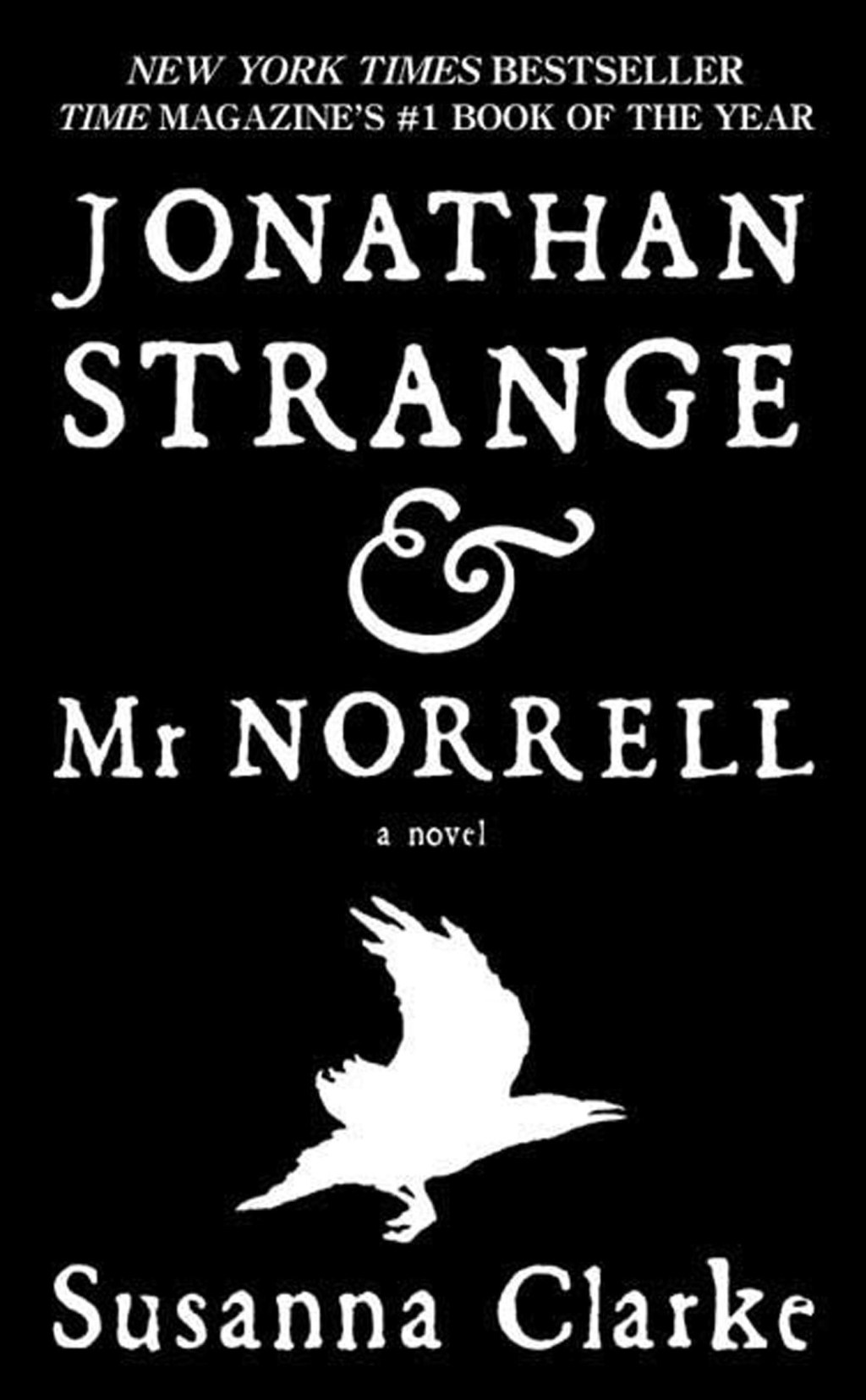
What do you get when you combine The Importance of Being Earnest with The Lord of the Rings?
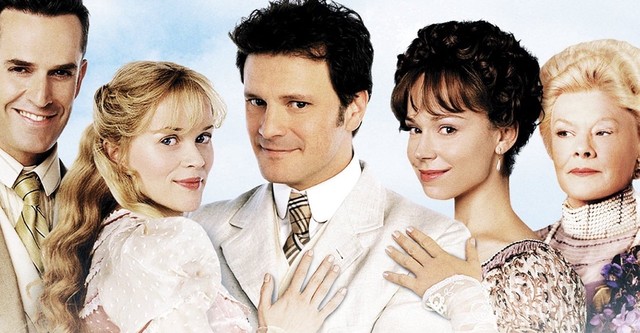
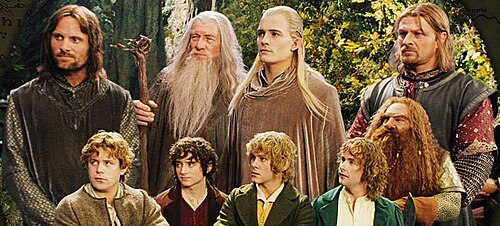
Ostensibly, you get Jonathan Strange & Mr Norrell.
Overview of Jonathan Strange & Mr Norrell
What is It?
In the midst of the Napoleonic Wars in 1806, most people believe magic to have long since disappeared from England—until the reclusive Mr Norrell reveals his powers and becomes an overnight celebrity. Another practicing magician then emerges: the young and daring Jonathan Strange. He becomes Norrell’s pupil, and the two join forces in the war against France.
But Strange is increasingly drawn to the wild, most perilous forms of magic, and soon he risks sacrificing his partnership with Norrell and everything else he holds dear.
Susanna Clarke’s brilliant first novel is an utterly compelling epic tale of nineteenth-century England and the two magicians who, first as teacher and pupil and then as rivals, emerge to change its history.
Jonathan Strange & Mr Norrell is a fantasy epic, a magical alternate history (set during the Regency/Napoleonic Wars era), and a dramedy of manners. The novel features several principle protagonists, as well as a large cast of returning characters, and multiple interweaving plotlines. While mostly set in England, in Jonathan Strange & Mr Norrell the characters also travel about the European continent, and even visit other worlds.
Who Wrote It?

Jonathan Strange & Mr Norrell is Susanna Clarke’s debut novel. Reportedly, the novel was inspired primarily by two sources. Firstly, by a dream that Clarke had while teaching English in Spain. Secondly, by a re-read of The Lord of the Rings, which occured at about the same time.
Susanna Clarke is also the author of Piranesi and The Ladies of Grace Adieu and Other Stories.
Jonathan Strange & Mr Norrell has been adapted into a television series. Piranesi is being adapted into a movie by Studio Laika (the studio behind Coraline and ParaNorman).
Content Warnings
Jonathan Strange & Mr Norrell is not an explicit book, nor is there any real need for content warnings. There’s no sex or swearing, no nudity, etc. There are some descriptions of war, or mentions of corpses, and some physical descriptions of people who haven’t taken good care of themselves, but these passages are handled fairly sensitively and shouldn’t be disturbing to anyone.
Perhaps the most extreme description I can remember is a point later in the book where someone is shot in the head and said person is described as having “burst like an orange.” Personally, I found this description interesting.
Prior Reviewed Books
Piranesi: In another world that appears to solely consist of a gargantuan building filled with marble statues, a man who has forgotten his name and past happily(?) lives out daily existence. Piranesi a tight, well-polished, laser-focused, character-driven novel, although it lacks just about all of the scope and ambition of Jonathan Norrell & Mr Strange.
The Review
I was first introduced to Jonathan Strange & Mr Norrell in early high school, I believe, and, despite all of its excellent qualities, I struggled with it. I was an epic fantasy guy—at the time, Brandon Sanderson was my bread and butter. I’d read adjacent genres, like science fiction, but you couldn’t get me to touch Pride and Prejudice, let alone read it. Add on top of that the fact that Jonathan Strange & Mr Norrell is painfully slow-paced for anyone unfamiliar with British comedies of manners (and not particularly funny for anyone unfamiliar with British humor), and the result was that my much younger self sensed there was something good in this nut, but I couldn’t figure out how to crack it. I set the book aside, and it stayed aside for over a decade.
For whatever reason I remembered Jonathan Strange & Mr Norrell fondly that entire time. Something in me knew that I hadn’t been ready for it when I had first tried it, I suppose, while also recognizing its elements that should have kept me pushing through to the end. But during that long wait my palate had been expanded through things like The Importance of Being Earnest and my wife forcing me to watch multiple versions of Pride and Prejudice; I learned, among other things, that the utter, empty uselessness of almost everyone in old British high society was precisely what made poking fun at their foibles so funny.1
And so the ground was laid for my eventual return. Last month I read and reviewed Piranesi; I thought it was a well-written book, though mostly it left me hungry for more… And Jonathan Strange & Mr Norrell is more. A lot more. If Piranesi is a snack, or an appetizer, then Jonathan Strange & Mr Norrell is a heavy five-course meal.
Foundational to Jonathan Strange & Mr Norrell is the fact that once, long ago, England was an exceptionally magical place; most people, even commoners, were capable of at least a little bit of magic, and even faeries (useful ones!) were commonplace. But over time—particularly after the disappearance of John Uskglass, the magician-king of North England, but otherwise for no known reason—magic faded from England, leaving only charlatan sorcerers and “theoretical” magicians of the “modern” era (which, in the context of this book, is the 1800s).
And so this is where Jonathan Strange & Mr Norrell begins, in York with a society of magicians—none of whom are Strange or Norrell—who were quite put-out when a newcomer named John Segundus asked the society why there was no more magic done in England.
The response:
“[The question itself is wrong because it] presupposes that magicians have some sort of duty to do magic—which is clearly nonsense. You would not, I imagine, suggest that it is the task of botanists to devise more flowers? Or that astronomers should labour to re-arrange the stars? Magicians, Mr Segundus, study magic which was done long ago. Why should any one expect more?”2
This leads to a great deal of polite(?) debate, which is ultimately resolved by Mr Segundus visiting a secretive man who is rumored to be a magician—Mr Norrell—and persuading Norrell to perform magic for the other magicians. Norrell does so, and thus begins practical magic’s reentry into England.
Oh, by the way—the titular character, Jonathan Strange, whose name is listed first, won’t make his appearance for the first third of this nearly-thousand-page book.
It does not surprise me that Jonathan Strange & Mr Norrell took Clarke about a decade or so to write. This book is rich with details, explanations, backstories, histories, and so forth. There is a multitude of characters, each with distinct personalities and foibles, many of which get at least small arcs. And, much to my liking, Clarke includes a great deal of footnotes which further illuminate the world or, occasionally, provide amusing commentary (along the lines of the footnotes in the Bartimaeus trilogy, but tonally appropriate for this work.) If something can or ought to be included in the story and can be thoughtfully worked out, it will be—and yet nothing feels wasted or bloated.
Yes, at a glance it might seem odd that a book called Jonathan Strange & Mr Norrell would spend a third of the book entirely focused on setting up Norrell—another author might have only spent a chapter or so on such things—but, in Clarke’s hands, not a word is wasted.
Part of the reason this all works is because there are a significant number of characters and events to juggle. Volume I: Mr Norrell introduces magic back into England (through Mr Norrell), challenges Norrell’s homebody tendencies, gets Norrell in service of the English government, introduces the charlatan-sorcerer Vinculus, establishes Norrell’s enigmatic servant Childermass, introduces the thistle-haired gentleman (debatably the book’s primary antagonist), gets Stephen Black started on his long and dreary journey toward something even greater—and more. In fact, as I sit here and think about what I want to share about this book, I’m astonished as I remember everything that Clarke manages to balance—if I hadn’t just read the book, I might have been skeptical whether it was necessary to have Mr Strange play a part at all, as there was already so much going on!
And I haven’t even mentioned Drawlight and Lascelles. I hate them.
Good characters, though.
But the point in my verbosity is that Jonathan Strange & Mr Norrell practices the good sort of maximalism. Everything is here, some readers will find that overwhelming, but it all serves a point, it all matches Clarke’s voice, and it all belongs.
Naturally, Clarke’s pacing is excellent—and it must be, for a book of this length and depth. A single paragraph can cover months or years of time, or several pages can cover minutes, and yet nothing feels rushed, nor drawn out.3 You get the sense that Clarke has a deep understanding of real English histories and peoples, down to minute details, and spent a significant amount of time working her fictional world into the real histories and meaningfully considering what would have changed in response to her various additions and revisions. As an author, I found her use of dates intimidating—she is not afraid to put a date to nearly everything. It makes me wonder if somewhere she has an epic timeline in which she mapped everything in her world to, so as to keep everything perfectly straight, even events that occurred far before this narrative.
So the first part of the book pushes forward, establishing and developing so many things—and just when everything starts to feel comfortable, Jonathan Strange appears and suddenly it feels almost like a new book. He does end up running into Norrell—England’s first “modern” magician isn’t swept out of the narrative, of course—and he even becomed Norrell’s pupil. This creates a powerful tension that further pushes the narrative forward, and starts making things more explicitly magical (although there are still several important, clearly magical events in the first third of the book). Norrell, though talented and powerful in magic, is a fully book-learned magician, and doesn’t think much of other approaches. He doesn’t experiment much and he doesn’t appreciate “uncomfortable” magics. Strange, on the other hand, doesn’t see how magic and scholarship could possibly be advanced without some risk and some, shall we say, field tests. This natural dynamic is instantly engaging and interesting, and naturally sets up a host of conflicts for Jonathan Strange & Mr Norrell going forward.
And I haven’t even gotten into Stephen Black’s encounters with the faerie… king, shall we say? But I shan’t, because my goal isn’t to summarize the entire book—I’ve probably been too verbose already. Suffice to say, as interesting and important as Jonathan Strange’s and Mr Norrell’s trajectories are, they are far from the only players in this story of magic’s return to England.
But in all this, I fear I am quibbling too much in details plot summary. Yes, there’s magic in this book. Yes, there is a goodly variety of interesting characters and storylines. There is drama and suspense, there is action and there is love—but other stories can claim to those things. So why read this book? What experience does Jonathan Strange & Mr Norrell provide that others books don’t, that justifies the significant investment of time and focus that this book demands?
I don’t have a word for what the dramedy of manners half of this book provides—I’m not familiar enough with the genre—but I can say that I was thoroughly delighted by the subtleties of character that Clarke weaves through this narrative. Sometimes the end result is delight or amusement as a detail remembered from paragraphs or pages before is paid off in an extremely humorous moment, sometimes the result body-shaking righteous anger at how despicable a character proves to be.
As for the fantasy element, I would say this book gave me wonder. And that’s something beautiful which I am always seeking in my magic. And I can’t say that I’ve ever read a book that blends this wonder with whatever a dramedy of manners provides—and not only does Jonathan Strange & Mr Norrell do so excellently, it blends the two so excellently that I’m astonished that this novel hasn’t inspired its own sprawling genre of fantasy in the same manner that most “medieval” (or, unfortunately—for Tolkien is anything but this—”generic”) fantasy clearly has planted its roots in Tolkien’s rich soil.
As An Aside
I’ve heard some describe the magic in Jonathan Strange & Mr Norrell as “scientific,” and I consider this description to be well-meaning and erroneous. Yes, this book discusses the practices of some magicians, and describes the requirements of some spells which have been formalized, creating the appearance of scientific understanding and process—but there’s no underlying logic to be followed. I do not believe that Clarke has created a magical science in the way that “hard” magic authors endeavor to do. Magic just works the way it works, except when it doesn’t, and there usually isn’t an explanation why—which is perhaps the reason why madness and magic are so deeply wound together.
The way Clarke weaves her elements of magic all together, and the manner in which she implements magic in her world, often left me with a grand sense of wonder, and a childlike delight not unlike when my daughters experience something beautiful for the first time in their fresh lives. I haven’t read a fantasy novel particularly interested in wonder for some time, and I’ve never experienced wonder with hard magic (or magic trying to be “scientific”), as that’s not the goal of such magic.
Another Aside: What’s Jonathan Strange & Mr Norrell about?
I want to note that this part of this blog post was a late addition. I had written and scheduled this post a week or two before I saw the below video, and Kristin made me realize that I’ve been doing my reviews wrong.4
To be extremely clear: I am not one of the idiot readers that she compares to contestants in a food-eating contest. I read my books slowly—sometimes even more slowly than I’d like, given that as I get older I don’t ingest new things as quickly as I once did, and that annoys me.5 No, it was something else that Kristin said, and it came along with some key questions that she felt readers needed to ask themselves to see if they were actually reading, rather than speed-eating.
Here were her questions:
- When was the last time you read a difficult sentence twice (because you wanted to make sure that you understood it)?
- When was the last time a passage in a book made you stop, put the book down, and just sit with what you just read (for a minute) before continuing?
- Can you tell me, off the top of your head, what the last book you read was actually about?
- Note: The premise, or a list of events, doesn’t count. What is (are) the argument(s), thesis (theses), or emotional arc(s) of the book? What was it about? Or, if it was about nothing, can you justify that claim?6
That last question, in particular, made me stop and think. I could answer all of these questions, thankfully—and I will in a moment—but for some reason answering that last question, with regards to Jonathan Strange & Mr Norrell, made me conclude that I had been lazy in my review of this book, as well as several others—I’ve fallen into the trap of focusing too much on simply what happens in the book. It’s an easy way to pump out blog posts, but that doesn’t make for a good review, I don’t think—or, at least, not a great one, and I don’t want to settle for meh. And though this blog (as I’ve mentioned before) isn’t my highest priority when it comes to my various writing projects, anything worth doing is worth doing well, or at least improving at over time.
So, let’s make a course correction in this review, and let that correction make some promises about what’s to come. I’m not going to answer all three of Kristin’s questions for every review going forward, but I will for this one.
(And, yes, this change seems so obvious that I should have thought of it before, but hindsight is 2020. Also, I’m not universally condemning everything I’ve previously written, but just acknowledging that I may have gotten lazy or rushed recently and need to try harder, or decide to not do something if I’m unwilling to do it well.)
When was the last time you read a difficult sentence twice (because you wanted to make sure that you understood it)?
Jonathan Strange & Mr Norrell had me pausing and puzzling through sentences here and there, or looking up the meanings of words. Easy answer.
When was the last time a passage in a book made you stop, put the book down, and just sit with what you just read (for a minute) before continuing?
Technically this happened last in American Paladin, but I want to wait until I actually review that book to discuss that gut-punching quote (a quote which, so far, appears to serve as the book’s spine).7
But, yes, this also happened in Jonathan Strange & Mr Norrell as well.
What was the last book that you read actually about?
Jonathan Strange & Mr Norrell is far too much book, too rich and too complex, to be about just one thing. But when I stop and think for a moment, four things come to my mind above all others.
And please keep in mind: this is what stood out to me.
1) Practical Versus Theoretical Approaches — Doers VS Posers VS Leeches
I’m going to share again a quote I shared earlier. The context: Mr John Segundus just asked the magician society of York why magic is not done in England any more, much to their consternation. Their response:
“[The question itself is wrong because it] presupposes that magicians have some sort of duty to do magic—which is clearly nonsense. You would not, I imagine, suggest that it is the task of botanists to devise more flowers? Or that astronomers should labour to re-arrange the stars? Magicians, Mr Segundus, study magic which was done long ago. Why should any one expect more?
Imagine how ridiculous it would be if, for some reason, it was decided that athletics had reached their absolute peak and that there was no point in trying anymore. There was no point in any further competitions, no point in any new athletes striving to break personal (or world) records—everything that could be done has been done, and trying to even match a fraction of what has been done is rather hard and inconvenient, so we should all just stop doing it and instead apply ourselves to studying it and arguing about it. Theoretical rugby is far more proper than practical rugby, you understand.

It’s hilariously stupid, isn’t it? And yet, that’s where our world has been stuck in so many areas—for too long! In my space-themed footnote (#2), I mentioned how space travel had been in this same rut until curious individuals decided that having a man briefly visit the moon wasn’t enough anymore—it’s time for the next stage! That, of course, ruffled the feathers of people who were quite happy with the status quo, but I’m happy those stodgy fools had their feathers ruffled—but it would have been better if they had been plucked.
Yes, this is relevant to Jonathan Strange & Mr Norrell, because in this book England is filled with theoretical magicians who believe they know what magic is and how it ought to be done—and yet not one of them could do so much as will the tiniest breeze into existence. (This is explicitly pointed out by the narrator.) Thus, they are extremely threatened by the appearance of practical magicians, like Norrell, and do what they can to limit or prevent his influence, at least until it becomes unmissably clear that their time has passed and no one is listening to them anymore. Any prestige or meaning they had as posers has been taken away by doers.
It reminds me of a Devon Eriksen quote:
“There is no point in arguing over anything which can be resolved by test or experiment.”
Well. Can magic be done? It can. And what can be done with magic? Among other things, winning the war against Buonaparte. Therefore, is magic useful? Proper, even?
Obviously—not that how proper something is has anything to do with its value or usefulness.
Anyway, this is a very interesting aspect of Jonathan Strange & Mr Norrell, though it mostly resolves itself by the end of the first third of the book, at which point Mr Norrell has established himself as a powerful magician and most theoretical magicians were forced to publicly renounce their practice. I say mostly, because the posers may have been dealt with—but the leeches remain. People like Drawlight and Lascelles, who can’t do magic themselves (and have no interest in doing it), but are very interested in having opinions on magic, in having those opinions heeded, and in attaching themselves to great magicians so that they, by proxy, can gain wealth, prestige, and authority. In many ways, these leeches are even more dangerous and awful than the posers were.
2) Formal, Controlled Education VS Messy Experimentation
Norrell and Strange represent opposite ends of a continuum. Norrell lives, breathes, and swears by book learning—he has bought almost all of the worthwhile books on magic in England, he actively (and regularly) studies each of them, and, in very controlled environments, he practices the spells within them. To Norrell’s credit, his approach works very well for him—he is the force that begins the return of magic to England, and he is capable of powerful feats of magic. He’s still a form of doer, in spite of himself.
Strange, on the other hand, is a fearless discoverer. Part of this is by necessity, as he doesn’t have access to a fraction of Norrell’s resources—thus, the best way for him to learn magic is to figure it out as he goes. Unlike Norrell, he spends a great deal of the book traveling to faraway locations and finding himself in situations where he has to think on his feet and create spells on the fly. He doesn’t have all of the knowledge, refinement, and niche knowledge that Norrell does—which is, sometimes, a detriment to him—yet he still manages to accomplish things Norrell couldn’t dream of, or wouldn’t dare attempt (and would forbid anyone else from trying).
So which method of learning does Jonathan Strange & Mr Norrell propose as superior?
I would say, neither. Both Norrell and Strange accomplish great things, and both more-or-less end up in the same place, in terms of knowledge, skill, and (amusingly enough) literal location. I don’t necessarily agree with this conclusion of the book’s, although that’s perhaps because I’m not able to easily think of real-world movers and shakers who were as aggressively tied to book learning and formal processes as Norrell is—movers and shakers tend to be outsiders, to create their own paths. They may have some book learning, but… Well, I think it’s telling how so many of the most successful people in our world either never went to college or dropped out before finishing, once they got what they actually needed.
This is one of Jonathan Strange & Mr Norrell‘s weaker conclusions, I think, in part because for most of the book I thought its arguments were pointing toward a different conclusion—such as, perhaps, that the world has far greater need of Stranges than Norrells. After all, we don’t see Norrell’s growth as a magician; he begins the book fully formed, and changes little. But we do see Strange’s growth, and how in just a few years he accomplishes what took Norrell a lifetime—but we also see some of the dangers of Strange’s draw-fire-aim approach, particularly in the last third of the book, which could be a reasonable suggestion that some of the tempering influences of those like Norrell could be useful to those like Strange.
Considering how bound together, as it were, Norrell and Strange’s fates are in the end, perhaps neither is the wrong answer, but both is the real argument. Both approaches are necessary, and persons of both approaches ought to work together.
Well, if that is the thought behind Jonathan Strange & Mr Norrell—what an annoyingly reasonable and moderate apporach!
3) Who Should Control Belong To?
This is a massive contention throughout Jonathan Strange & Mr Norrell. Norrell believes in strict controls and regulations—and that, naturally, he ought to be the one to come up with them. Before he even gets involved with the English government he forces his will upon the rest of England by buying up virtually every book on magic that’s worth anything; and then, by maintaining extremely strict control over his library, he retains a (I would say) wicked and unjust degree of control over all other magicians by determining what they can and can’t know. And, of course, once he gets a government job he pushes for more and more government regulation over magic, all guided by his approval.
All of this could be seen as a warning against centralizing knowledge and control; I bring it up because that’s what I get out of the book. Norrell, amusingly (and frustratingly) enough, claims to be trying to bring about a magical renaissance in England, but he spends far more time stamping out potential magicianship than encouraging or cultivating it—one such example being his magical efforts to exterminate Strange’s novel on magic from existence. And let’s not forget Norrell’s willingness to outright lie about Strange in an effort to discredit him, proving that Norrell cares less about his morals or status as a gentleman than he cares about retaining power.
It isn’t until Strange proves naturally talented enough at magic that Norrell is essentially forced to take him on as a pupil—but even then, Norrell very strictly tries to control what sort of knowledge Strange is exposed to, so he doesn’t get ideas that Norrell disapproves of. It’s a sort of emotional and intellectual abuse that I found absolutely inexcusable, and I utterly despised Norrell by the end of the book.
Norrell’s death-grip on maintaining control is also one of the driving forces of conflict and suffering throughout the book. A great deal of this book’s evil is directly committed by the faerie gentleman that Norrell summons early on, but Norrell’s complete unwillingness to teach anyone about faeries, let alone acknowledge that he summoned a faerie and that his faerie might be the cause of some of the strange and evil magical happenings in England, causes several people to suffer for years entirely unnecessarily, and prevents others (such as Strange) from being able to do anything about it. Norrell is the definition of a selfish, control-hungry, and unaccountable bureaucrat and—well, I’ll say it again, I hate him.
Strange, on the other hand, does what he can to share his magical knowledge (later one); he trusts the English to be able to make decisions for themselves, once armed with knowledge, even if he or Norrell doesn’t agree with those decisions. Strange isn’t perfect, but his approach in spreading knowledge, rather than hoarding it, has pretty much exclusively positive results, in direct contract with Norrell’s process.
And then the book ends with knowledge being decentralized, and many magicians coming forward to practice magic—although, unfortunately, most seek to act as “Strange-ites” or “Norrell-ites,” rather than finding there own paths. The existence of so many Norrell-ites leaves a dismal (indirect) promise that at some point in the future the Norrell-ites are going to use government force to prevent Strange-ites from learning and acting in ways that the Norrell-ites don’t approve of, exactly as their ideal magician once did. It’s a very powerful example of how greater access to knowledge is exclusively a net good, though it will inevitably produce small-minded fools who seek to use that knowledge to control others, perhaps because they fear or hate people in general.
4) When Does a Passion (or Hobby, or Profession) Become Destructive?
And finally—when does a passion, hobby, or profession become destructive? Even when trying to do something for the good of the world, how far is too far?
Note that I’m not talking about small-time things—I’m talking about big things, like starting world-changing companies, becoming a powerful politician, or becoming a deeply influential public figure. In Jonathan Strange & Mr Norrell, it’s noted that many magicians never marry because marriage (and family) is too distracting to magic—but if marriage and family are two of the most important things in this world, what does that say about how detrimental being a magician, as a profession, is on most people?
Well, I’m not sure that Jonathan Strange & Mr Norrell has a satisfying answer to that. Strange and Norrell both do great things, and they return magic to England, but this comes with some steep costs to their personal lives, and to the lives of those around them. Norrell never marries, nor is it suggested that he ever has much in the way of romantic interests, or even friends—his profession of being a magician is what he does, and that profession is all-consuming. This makes me wonder if Strange would have ever gotten married if he had become a full-fledged magician first; the poor creature he was engaged too would have inevitably been forgotten as Strange spent more and more time with his nose in books, or out in the field experimenting, while the wedding date was pushed back exponentially.
And the ending—well, I don’t want to spoil its exact details, but let’s just say that I found Arabella’s and Strange’s relationship disappointing, particularly Arabella’s apparent willingness to put up with it.
Perhaps Jonathan Strange & Mr Norrell‘s contention is that great people are necessary, but that great lives ought to come with a great warning: greatness and excellence can be very costly, particularly when they are pursued in a single-minded manner, and that price might be extracted from the lives and well-being of those around you.
And now, all that having been said… back to our regularly scheduled programming, written well before this section of this post existed.
Wrapping Up
Jonathan Strange & Mr Norrell is a bit of a left-field book for me. Yes, it’s a fantasy novel, meaning it’s probably outside the wheelhouse of the sort who regularly discuss Austen, Dickens, and My Fair Lady; at the same time, it’s a very English dramedy of manners that takes itself seriously, putting it outside the wheelhouse of fans of Sanderson, Jordan, or Farland. Clarke does an excellent job of blending these two genres together into something that I imagine was revolutionary for its time, and which still isn’t very common today.8
And, my goodness, I am still stunned by how deep the world is. If Clarke’s world does not have comparable depth to Tolkien’s, she creates an utterly convincing illusion that it is.
I very much enjoyed Jonathan Strange & Mr Norrell, and I would highly recommend it.
Enjoyed this review? Consider subscribing below so you never miss an update! You can also follow me on X.
While I have not written a comedy of manners, fans of fantasy may enjoy my novel Inner Demon, which features memory loss, found family, and a sinister plot. Alternatively, consider my dark science fiction novel, The Failed Technomancer, which has man-eating robots in it.
- I still have a hard time not hating all of those useless people, though. I think it’s wrong to hate people for being more blessed than others—that’s a natural state of the world and, as long as it’s the result of individual liberty and/or individual property rights being respected, then there’s nothing wrong with it—but when people choose to do absolutely nothing with their lives, particularly when they have the capacity to do incredible good, or at least apply themselves to some sort of excellence in something productive, that just irks me. ↩︎
- This hilariously and unintentionally mirrors real-world events all over the place—but, unfortunately, within the US. My mind in particular is taken to two things, one personal and one national.
For the personal comparison, I found it amazing that, while taking a creative writing program at BYU to learn how to be a successful author, nearly all of the creative writing professors had either never actually published or hadn’t published in the genres they were teaching. As well, none of them, save Sanderson (an adjunct professor), made a living off of their writing, nor any sort of income, nor had meaningfully studied how to do so. They just weren’t the right sort to teach budding authors how to write genre fiction, let alone build careers.
For the national comparison, it wasn’t too long ago that the idea of private companies (such as SpaceX or BlueOrigin) launching rockets into space was thought to be ridiculous—don’t we have NASA for that? Not that NASA had done anything significant in decades, of course—and then private companies managed to completely outperform NASA in all metrics save for age of existence.
I don’t bring this up to dunk on colleges and NASA (mostly—they deserve it), but to point out how the best fiction often unintentionally holds a mirror up to reality in interesting ways. I don’t believe that Clarke wrote Jonathan Strange & Mr Norrell with the intention to parody these sorts of things—otherwise the story would certainly be far shallower—but she was striving to accurately represent England at this time, within the fictional framework of a world with real magic, and it just so happens that such a situation mirrors real-world situations in amusing ways. ↩︎ - This passage of time feels real and natural, whether it’s stretched out or condensed. It’s something I appreciate that isn’t often done well in other books—usually I’m told after the fact that a great deal of time has passed, and am surprised by that fact, and learning this detail after the fact does nothing to change the fact (that word is starting to lose meaning, I fear) that things felt rushed when they technically weren’t. This is a condensed feeling I’ve gotten from other stories, to be clear. ↩︎
- If you’ve been enjoying my reviews anyway—thanks! My plan is not to stop reviewing things in a more general sense, touching on what happens in the book and on elements shared across books, but I’ve been feeling dissatisfied with doing solely that. Consider this part of this post to be about an expansion, rather than a change, in focus. ↩︎
- meme_about_old_farts_complaining.jpeg ↩︎
- I also want to state that I don’t think Kristin is suggesting that most (good or worthwhile) stories are written with an intentional argument in mind, but some sort of point to everything will naturally develop in a well-formed book—and that point will likely come across differently to different readers. When this is done poorly—when an argument becomes more important than good storytelling—then you get preachy writing, and no one likes that. ↩︎
- You can get a preview of what’s coming with this X post, if you’re so curious. ↩︎
- I think Miss Percy’s Pocket Guide (to the Care and Feeding of British Dragons) is an modern example of these two genres being blended? I haven’t read this one, I must admit. Perhaps epic fantasy dramedy of manners is a bigger genre than I realize. ↩︎

 Boo Ludlow
Leave a comment